Tag Archives: dynamo
223. Helioseismic evidence that the solar dynamo originates near the tachocline
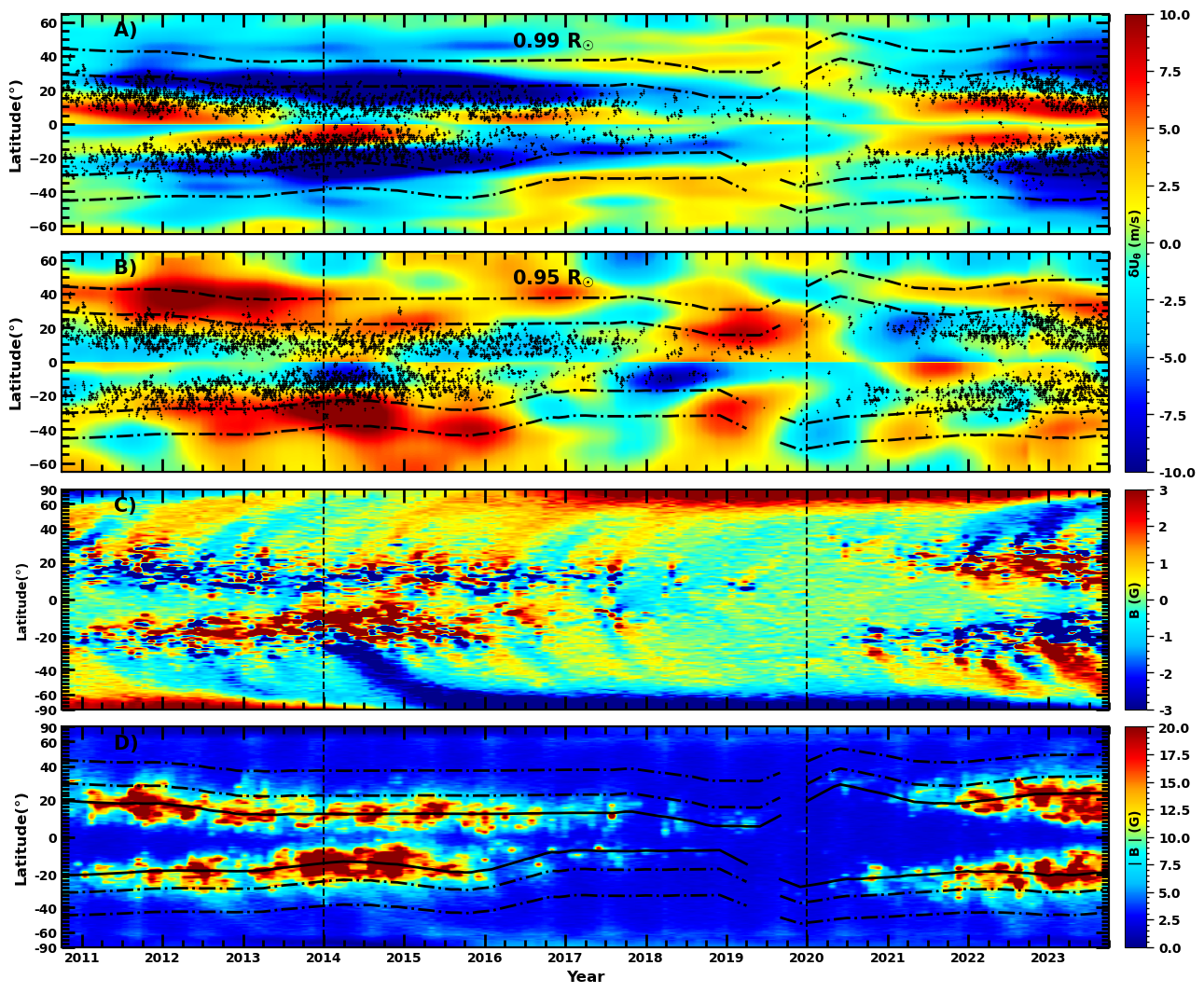
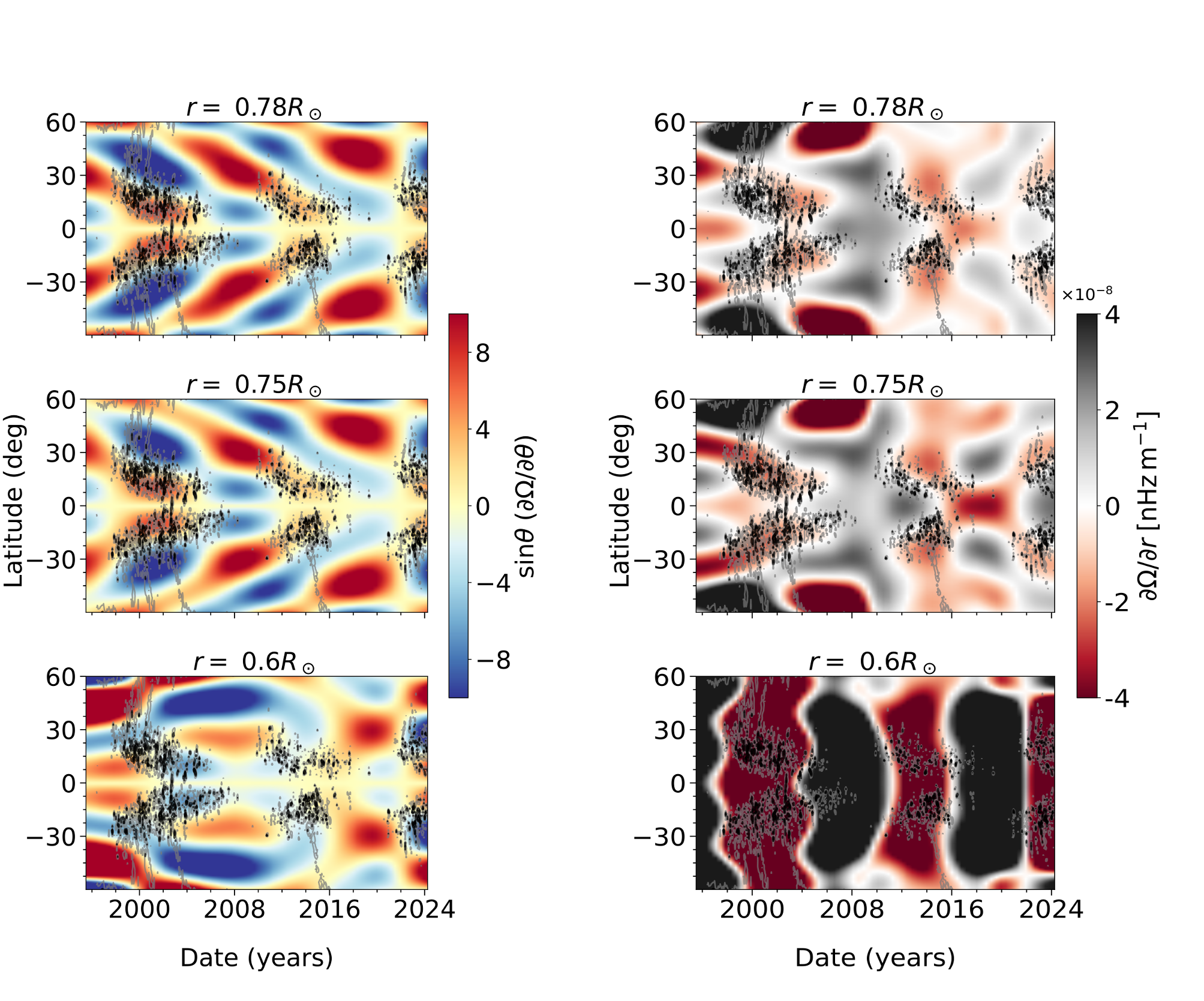
Helioseismic analysis of solar torsional oscillations reveals dynamo-wave–like signatures that originate near the tachocline and propagate through the convection zone, linking internal zonal flows to the surface magnetic cycle. Additional evidence from frequency-splitting coefficients and rotational shear variations shows strong solar-cycle correlations, supporting the tachocline as a primary site of solar dynamo action.
217. Mother’s Day 2024 Superstorms: Tracing the Roots of Solar Eruptions Weeks Ahead
Multiple X-class flares and CMEs were produced by AR 13664/8 during the Mother’s Day week of 2024. This study suggests that predicting the locations of magnetically complex active regions, and studying and tracking their eruptive states using different proxy parameters can greatly improve the capability to forecast intense storms.
205. Is the solar meridional circulation profile single-, double-, or multiple-cell?
204. Exploring Meridional Flow in the Solar Polar Caps
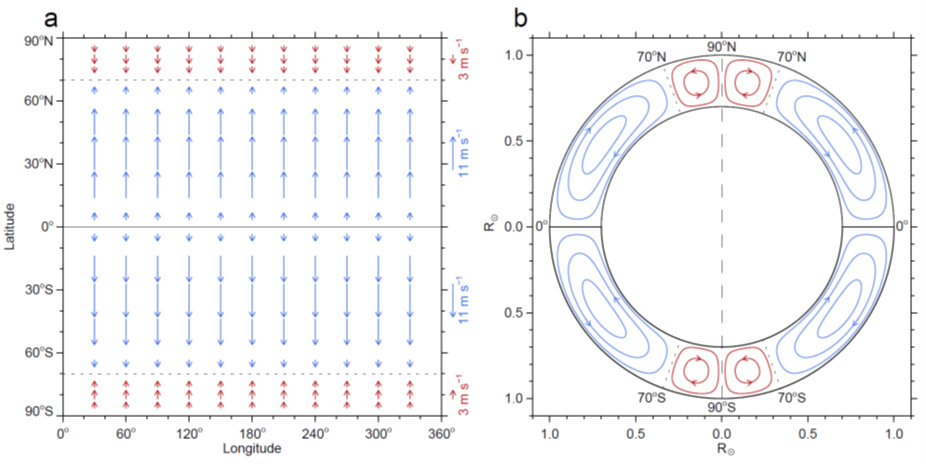
A surface flux transport model, using HMI-observed global magnetic field and active regions as inputs, with different polar meridional-flow profiles simulates the magnetic field in the polar caps. The simulation is then compared with Hinode-observed polar magnetic fields. The result supports an existence of counter cells above 70-degree latitude in each hemisphere.
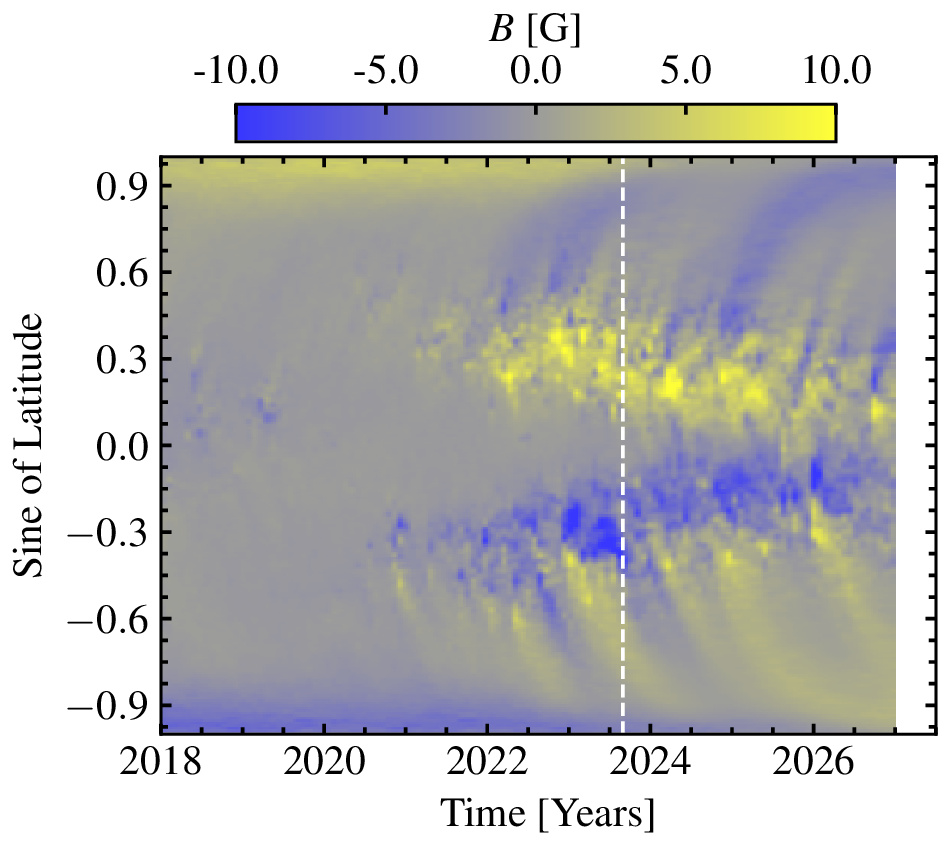
199. Cycle 25: Timing of Polar field Reversal based on Advective Flux Transport Model
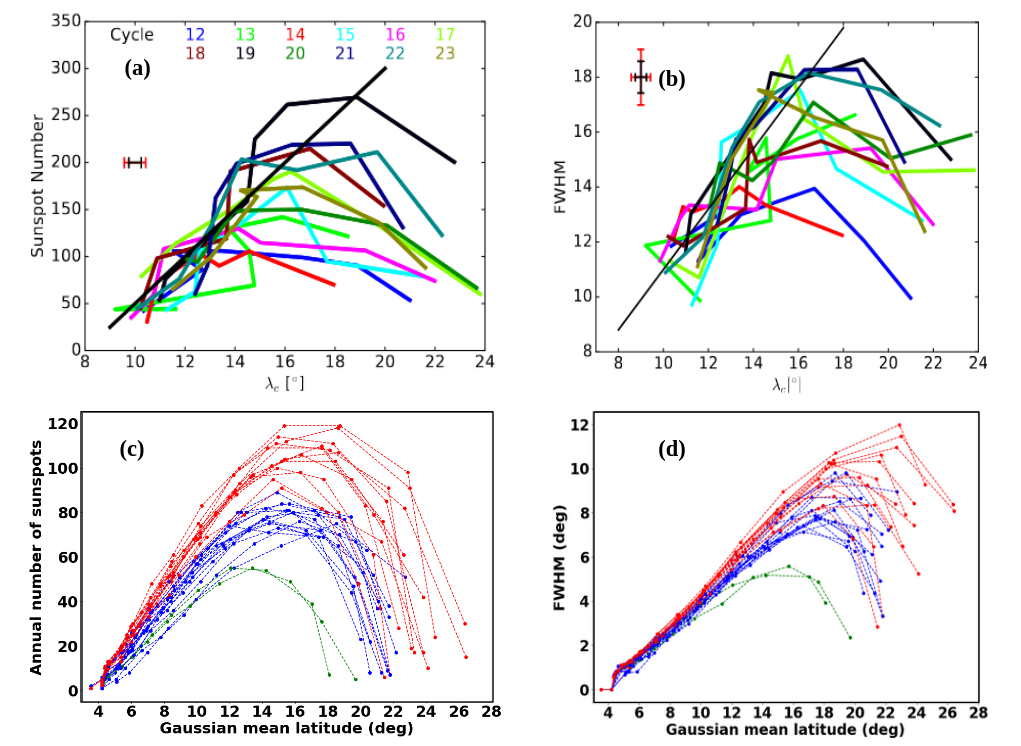
191. Explaining why all solar cycles rise differently but decay in the same way
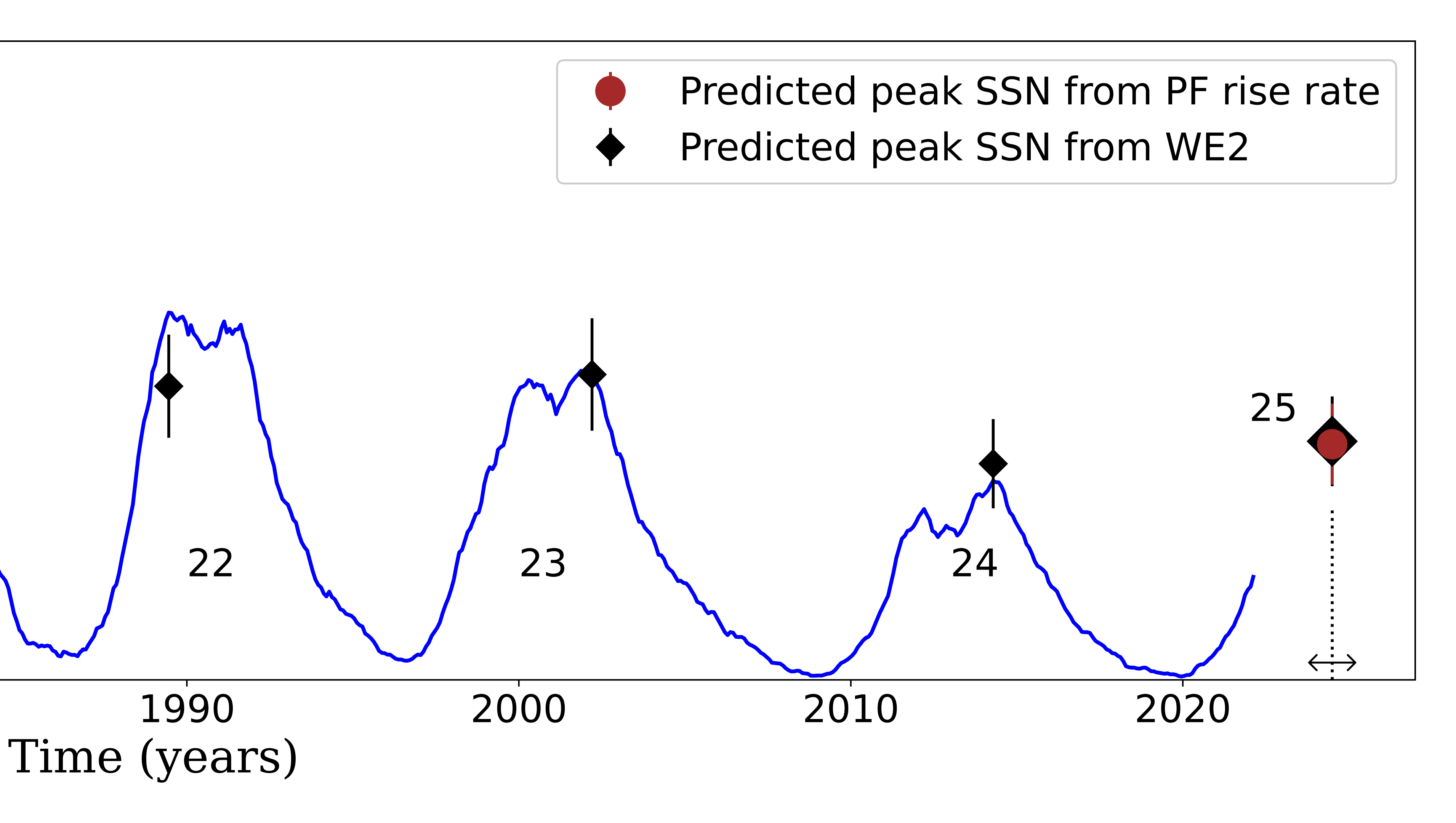
178. Prediction based on the polar field rise rate suggests that Solar Cycle 25 will be slightly stronger than Cycle 24
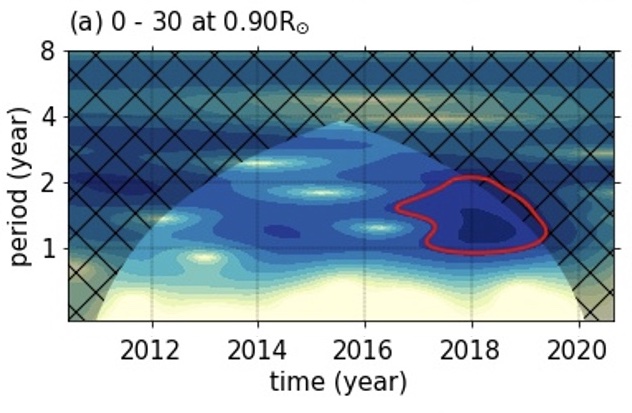
169. The QBO-type signals in the Subsurface flow fields during solar cycles 23 and 24
168. Introducing the SPEAR Catalogue from HMI Data
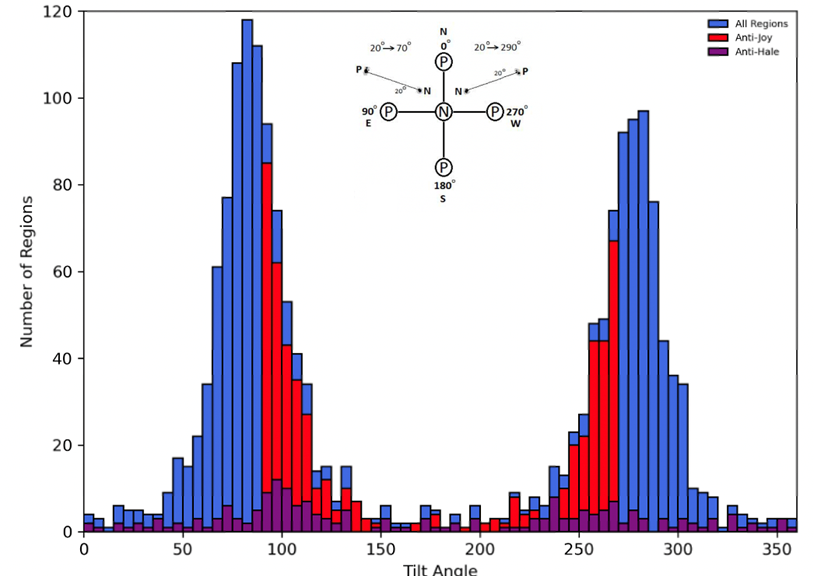
In order to make the properties of magnetic features observed by SDO/HMI more accessible, the Solar Photospheric Ephemeral and Active Region (SPEAR) catalogue has been created as an easy-to-read tabulated text file. Tilt angles from the SPEAR catalogue are shown as a histogram (top) and as a function of latitude (bottom) with colors indicating all regions (blue), regions with anti-Joy (red), and anti-Hale (purple) tilts. Over 40% of regions disobey the laws of Joy and Hale.