Tag Archives: solar cycle

224. Moderate Nesting and Cross-Equatorial Asymmetry of Active Regions in Solar Cycle 24
Contributed by Aimee Norton. Posted on April 3, 2026

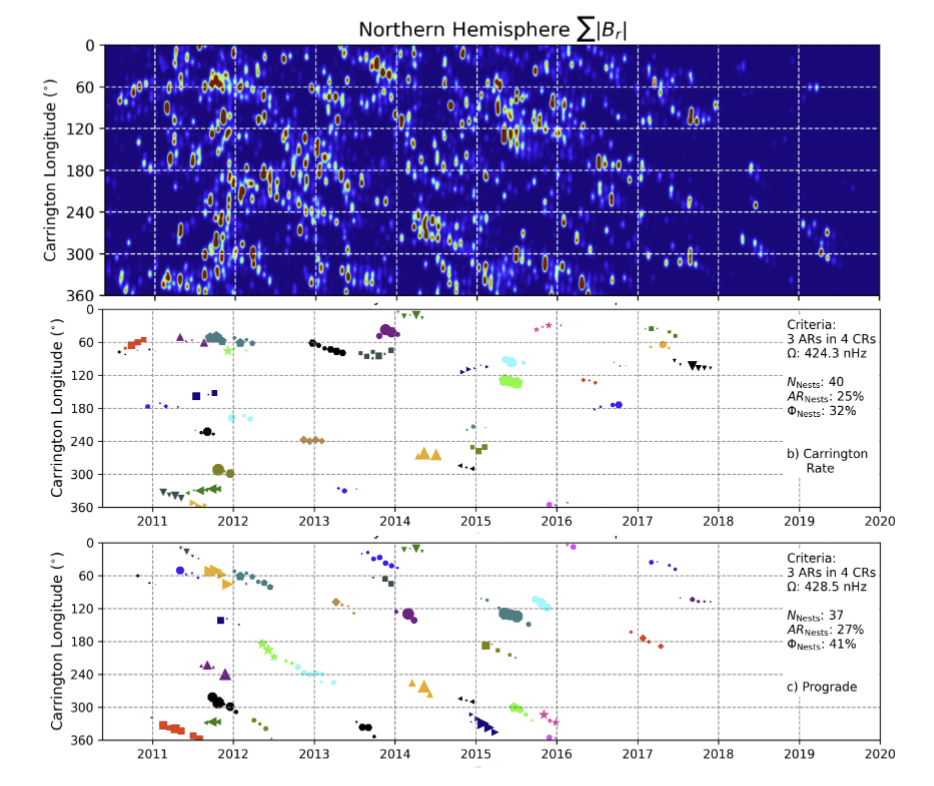
HMI data from Solar Cycle 24 data are used to determine how often the Sun emerges sunspots in activity nests. It is found that the Sun shows moderate nesting behavior with 41% (48%) of AR magnetic flux found in northern (southern) hemisphere located in nests. The maximum number of nests are found with slightly prograde rotational velocities, and the nesting behavior is asymmetric in the hemispheres.
196. Observations of Rossby wave parameter variations during solar cycle 24

Contributed by Mattias Waidele. Posted on September 25, 2023

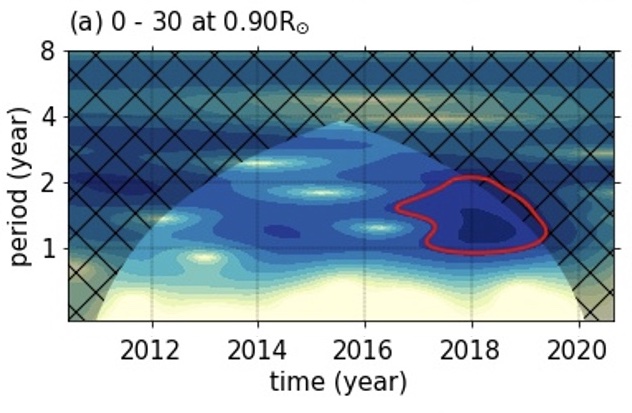
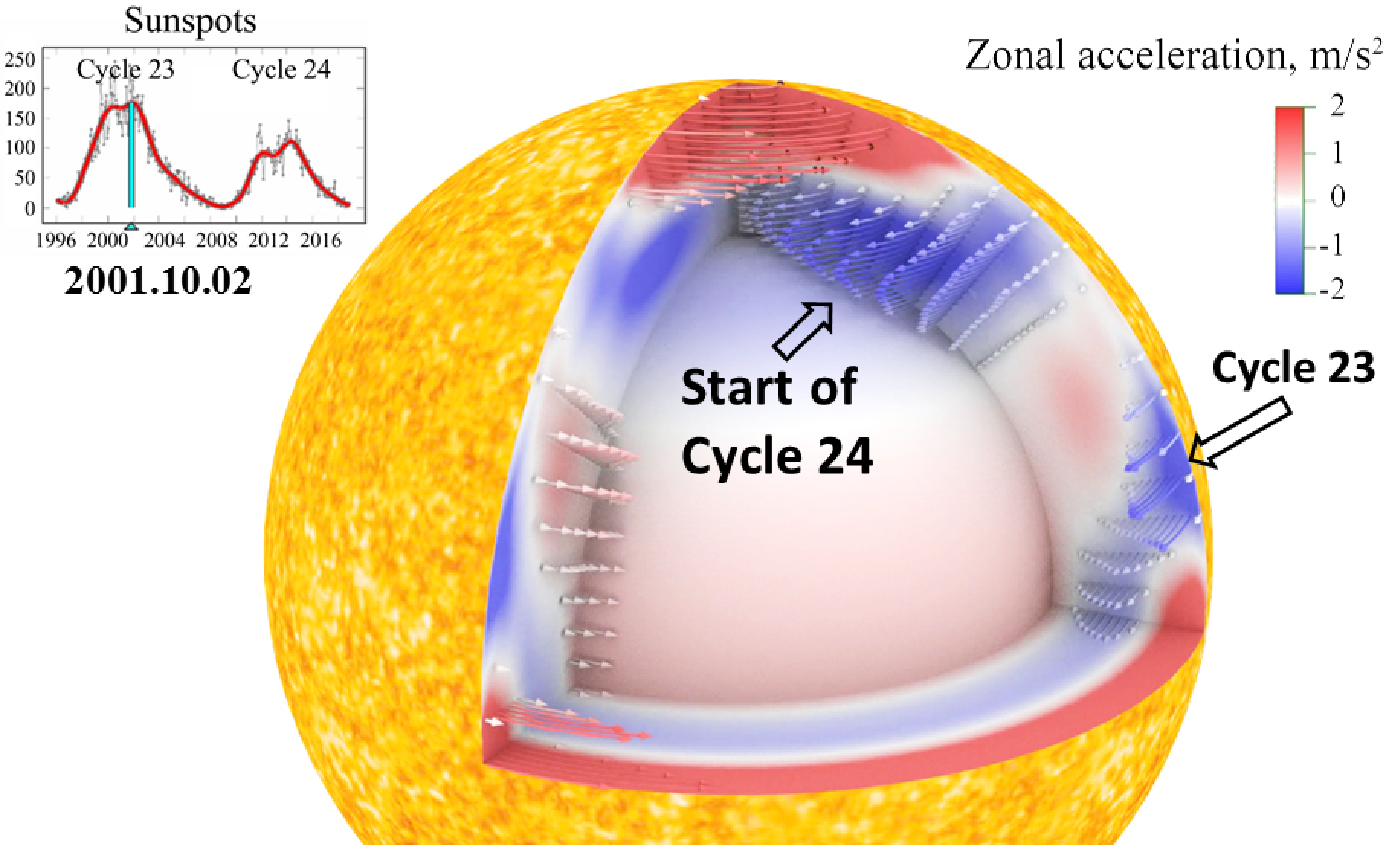
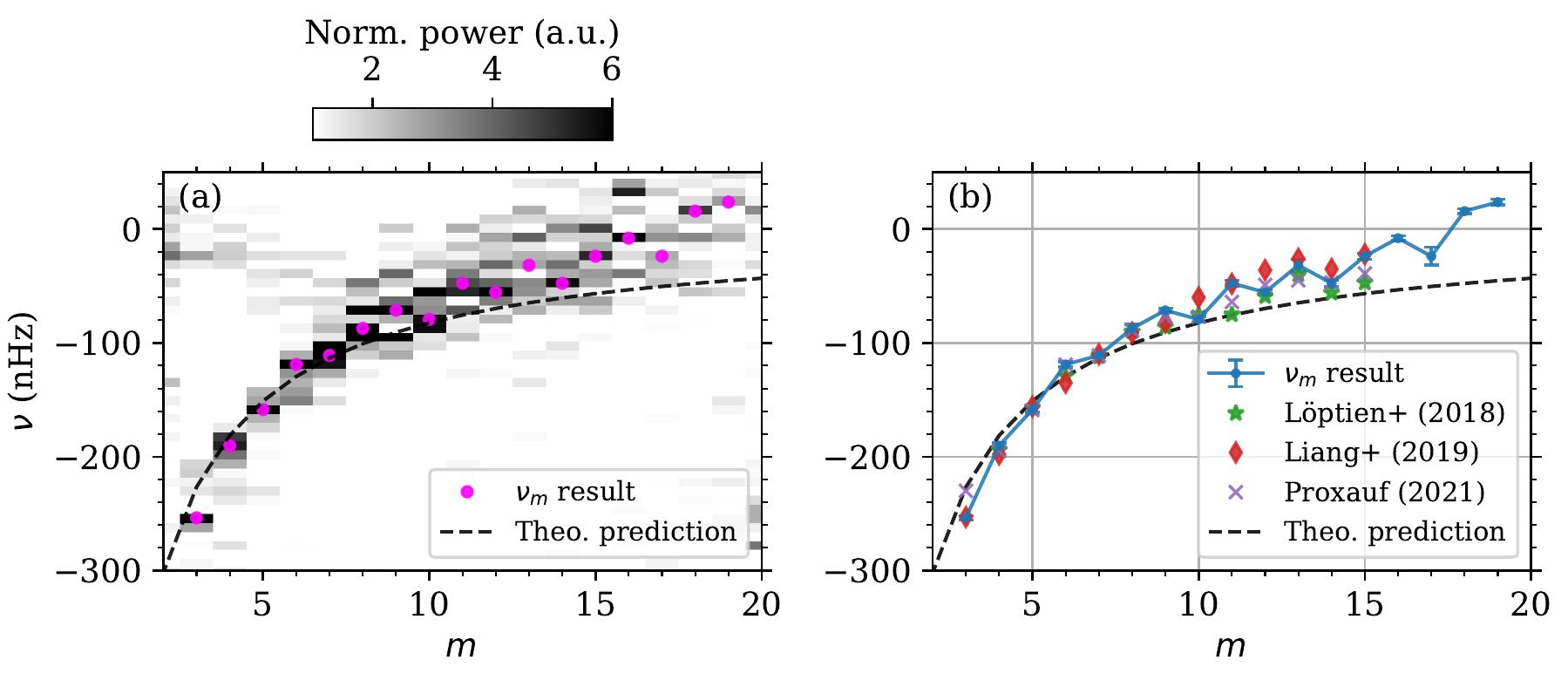
Equatorial Rossby waves are detected using the HMI’s time-distance subsurface flow fields. It is also found that the power of the Rossby waves show a positive correlation with the sunspot number, while the frequency of the waves shows an anti-correlation with the sunspot number.

149. Activity Complexes and a Prominent Poleward Surge During Solar Cycle 24

Contributed by Zi-Fan Wang. Posted on December 15, 2020

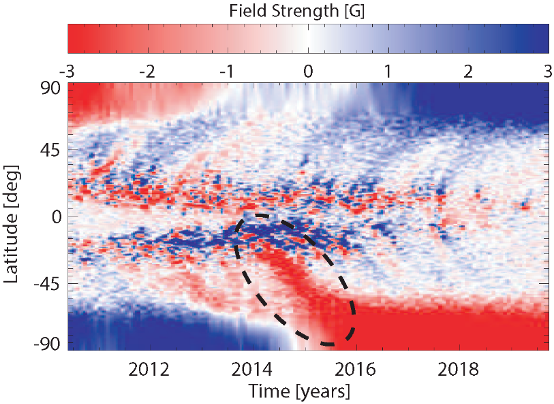
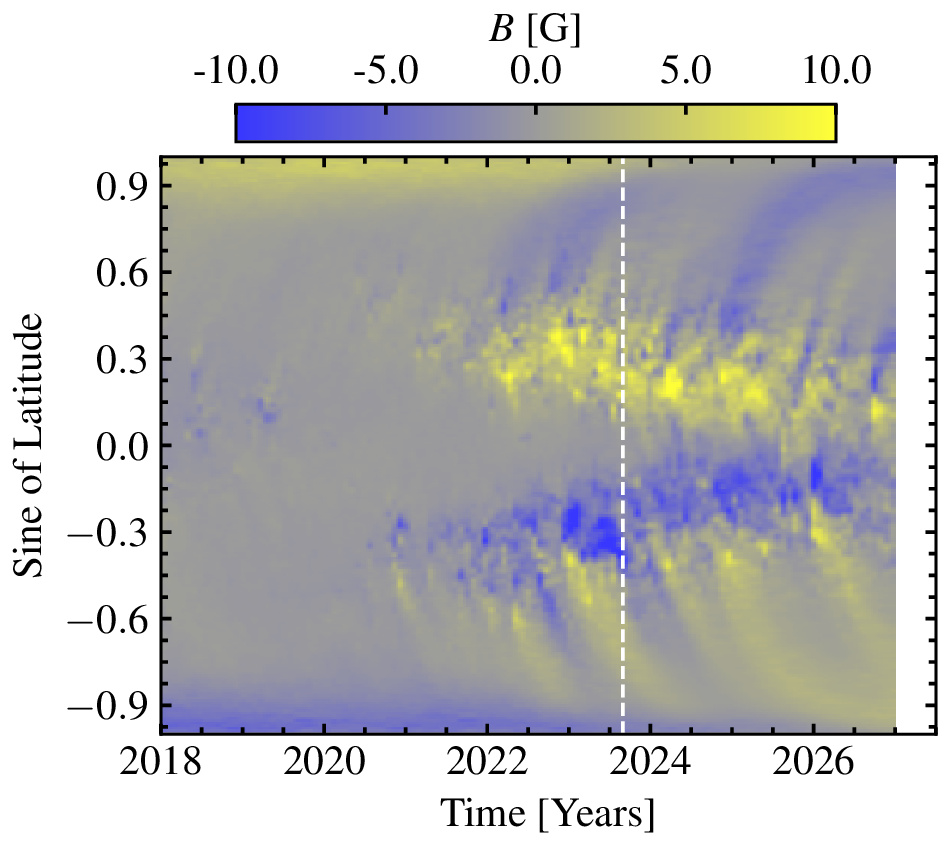
A surface flux-transport dynamo model assimilation shows that the long-lasting active-region complexes, which appeared in the Sun’s southern hemisphere during Cycle 24, played a crucial role in the pole’s polarity reversal and the field strength at the cycle minimum.

128. Evolution of Magnetic Helicity in Solar Cycle 24

Contributed by V.V. Pipin. Posted on June 25, 2019

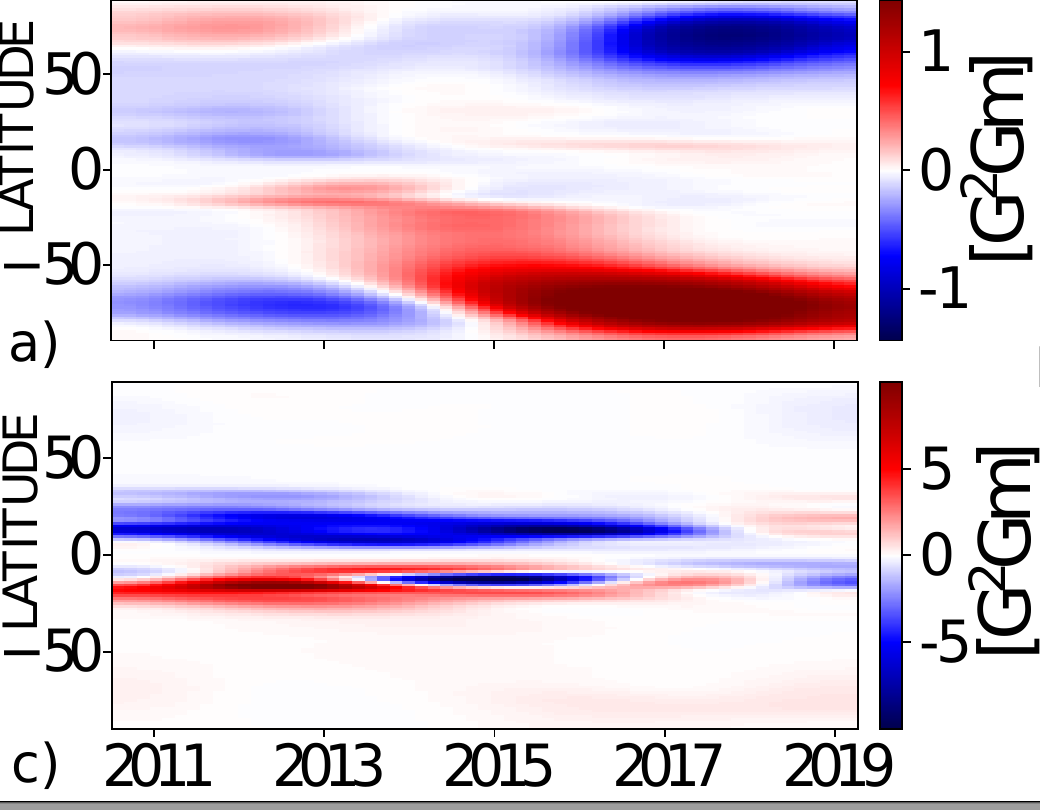
A novel approach is developed to reconstruct the surface magnetic helicity density for the Sun or sun-like stars. The method is applied on the SDO/HMI-observed vector field synoptic data to study the temporal evolution of the Sun’s magnetic helicity density during Solar Cycle 24.

107. Cyclic Variations of the Sun’s Seismic Radius

Contributed by Alexander Kosovichev. Posted on July 30, 2018

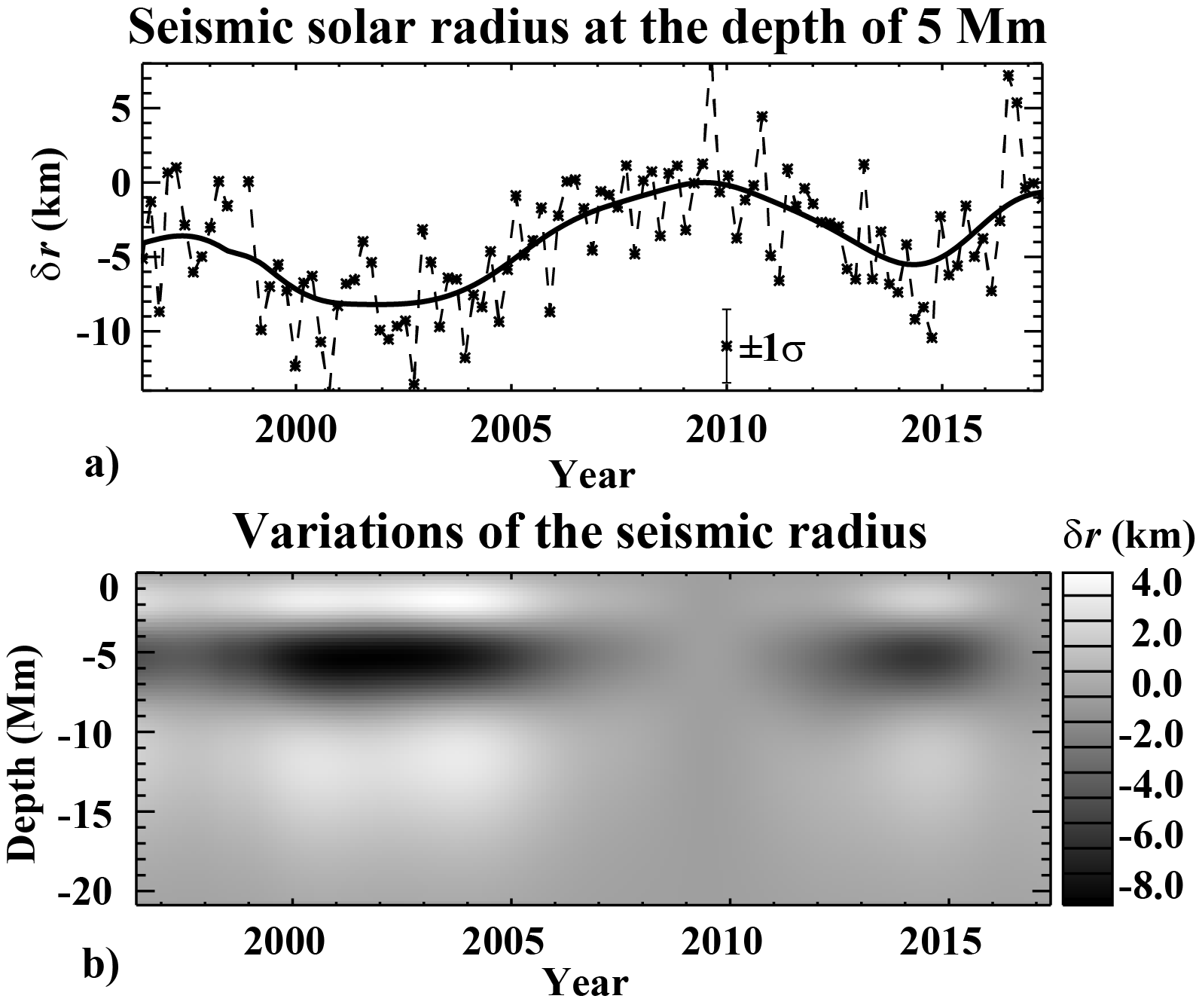
The Sun’s seismic radius, measured from the frequencies of f modes, is determined using both MDI and HMI data, covering a total of 21 years. It is found that the seismic radius is reduced by 1-2 km during the maxima, but the largest change of the radius happens at about 5 Mm beneath the surface.