Author Archives: admin

183. Phase shifts measured in evanescent acoustic waves above the solar photosphere and their possible impacts on local helioseismology

Contributed by Junwei Zhao. Posted on July 31, 2022

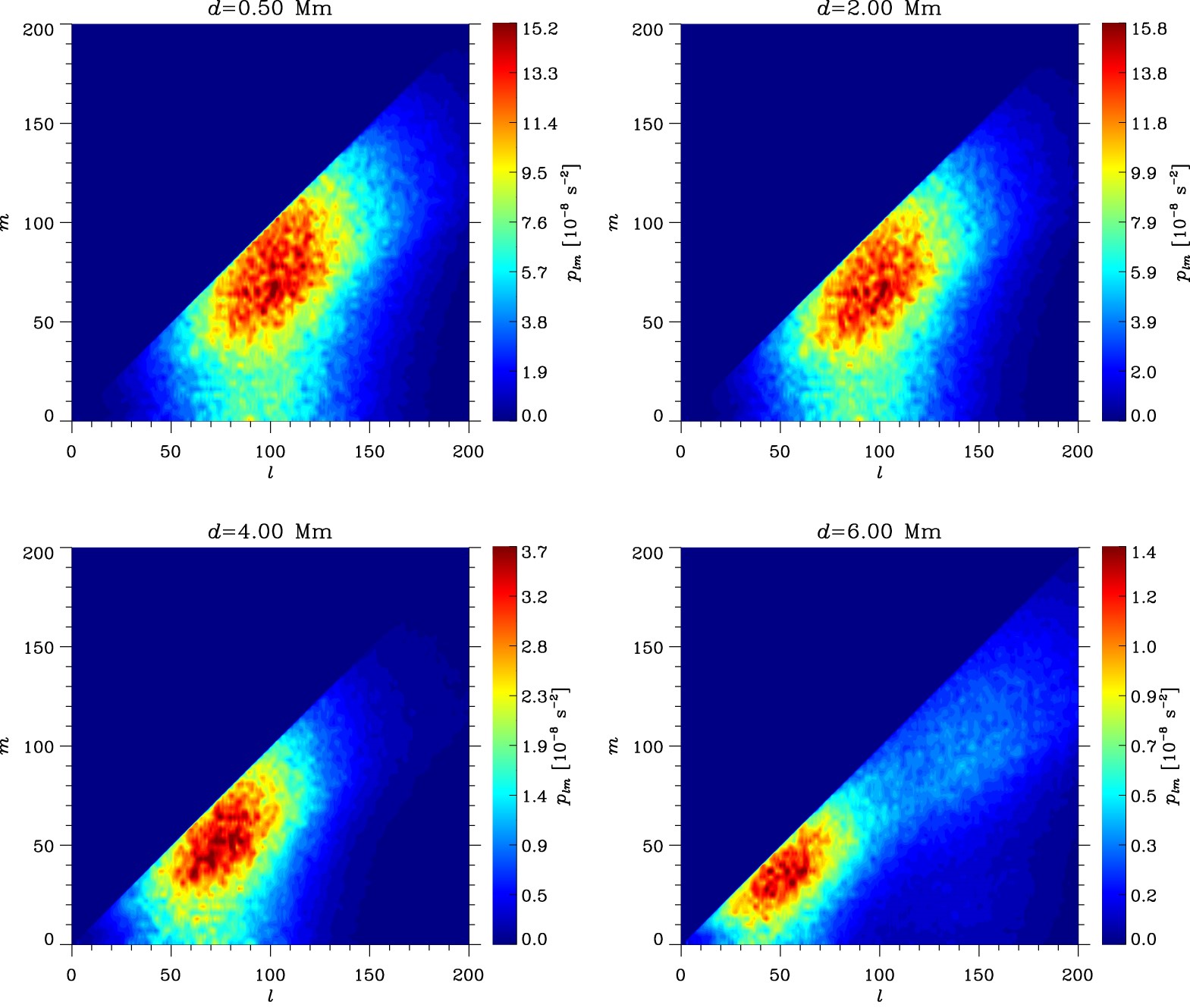
Analysis on high-spectral resolution data shows that oscillations in the higher atmosphere lead those in the lower atmosphere by an order of 1 s when their frequencies are below about 3.0 mHz, and lags behind by about 1 s when their frequencies are above 3.0 mHz. These phase shifts in the evanescent waves pose great challenges to the interpretation of some local helioseismic measurements that involve data acquired at different atmospheric heights.

182. The magnetic topology of the inverse Evershed flow

Contributed by Avijeet Prasad. Posted on July 29, 2022

Inverse Evershed flow is derived from chromospheric observations. Coupling these flow with the non force-free model, the authors find that the flow is driven along magnetic field lines connecting network elements with the outer penumbra by a gas pressure difference.

176. On the Hemispheric Bias Seen in Vector Magnetic Field Data

Contributed by Yang Liu. Posted on March 22, 2022

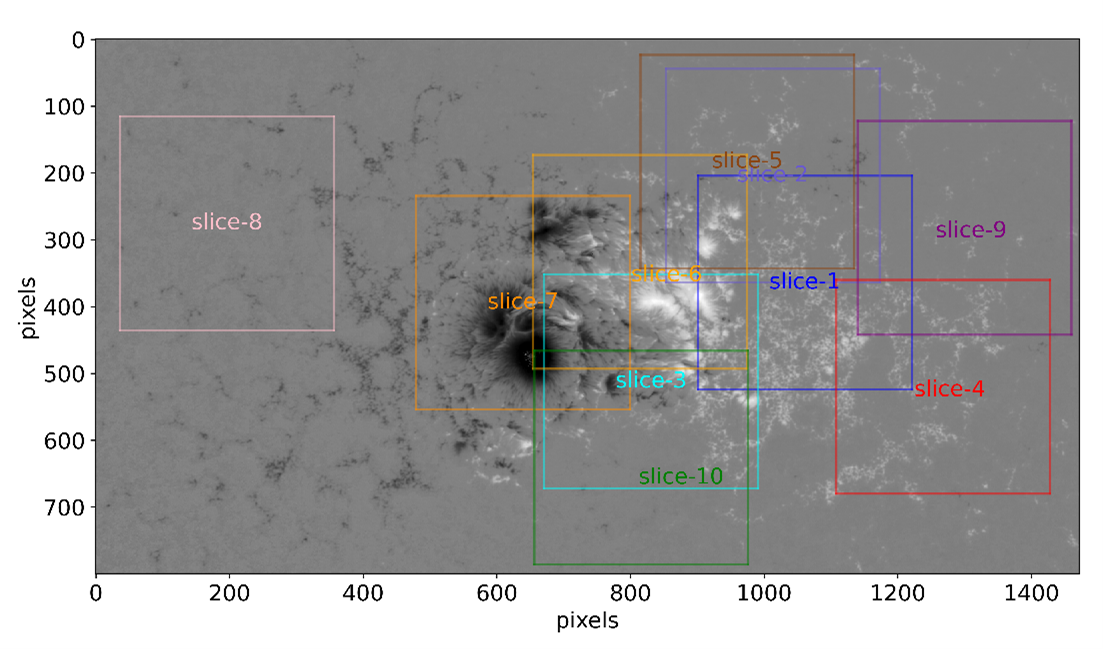
The authors show that the new inversion code for the HMI’s vector field reduces the number of pixels that reverse signs after passing the central meridian. The analysis also reveals that the radial components of the HMI’s vector magnetic fields have a hemispheric bias, too.

175. Solving a long-standing problem with the HMI data products

Contributed by Ana Griñón-Marín. Posted on March 21, 2022

For weak magnetic regions, HMI’s vector magnetic fields are known to give ambiguous signs in the east-west direction. A new inversion strategy is developed to address this problem, and the follow-up analysis shows that the new code improves HMI’s weak vector magnetic fields.

174. Toward Improved Understanding of Magnetic Fields Participating in Solar Flares: Statistical Analysis of Magnetic Fields within Flare Ribbons

Contributed by Maria Kazachenko. Posted on February 24, 2022

Through analyzing a number of active regions, this analysis finds that while flares are guided by the physical properties that scale with AR size, CMEs are guided by mean properties, with little dependence on the amount of shear at the polarity inversion line or the net current.