Tag Archives: flares

173. Buildup of the Magnetic Flux Ropes in Homologous Solar Eruptions
Contributed by Rui Wang. Posted on February 17, 2022

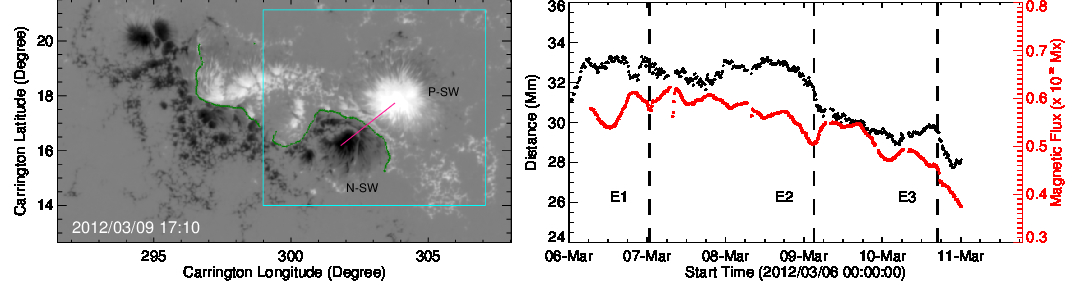
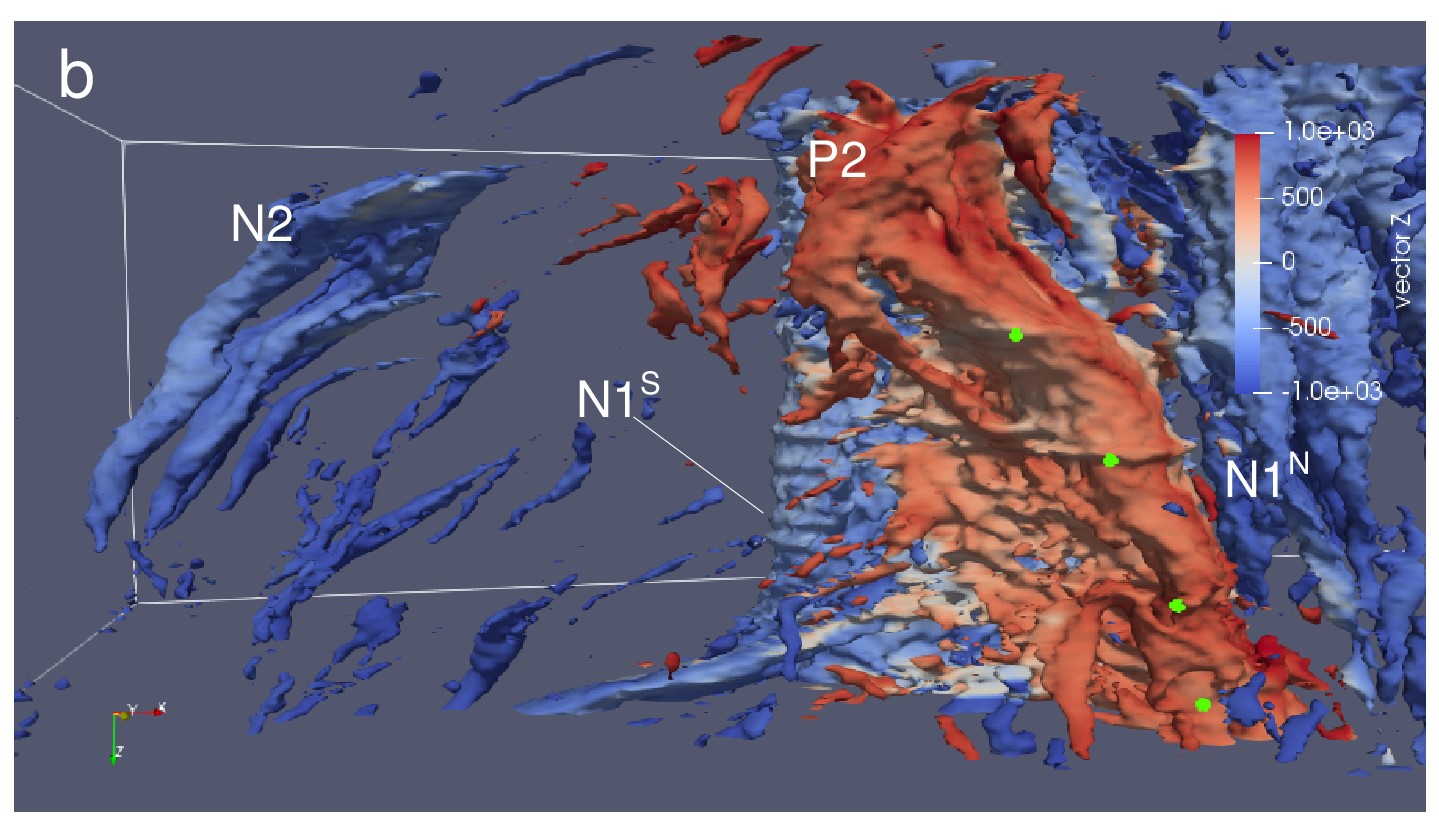
This analysis shows that a new bipolar emergence, whose positive polarity collided with the pre-existing negative polarity, in AR11283 led to energy and helicity buildup in the form of magnetic flux ropes. Recurrent energy releases caused a few homologous CMEs from this region.
171. Flare-induced Sunquake Signatures in the Ultraviolet as Observed by the Atmospheric Imaging Assembly

Contributed by Sean Quinn. Posted on November 23, 2021

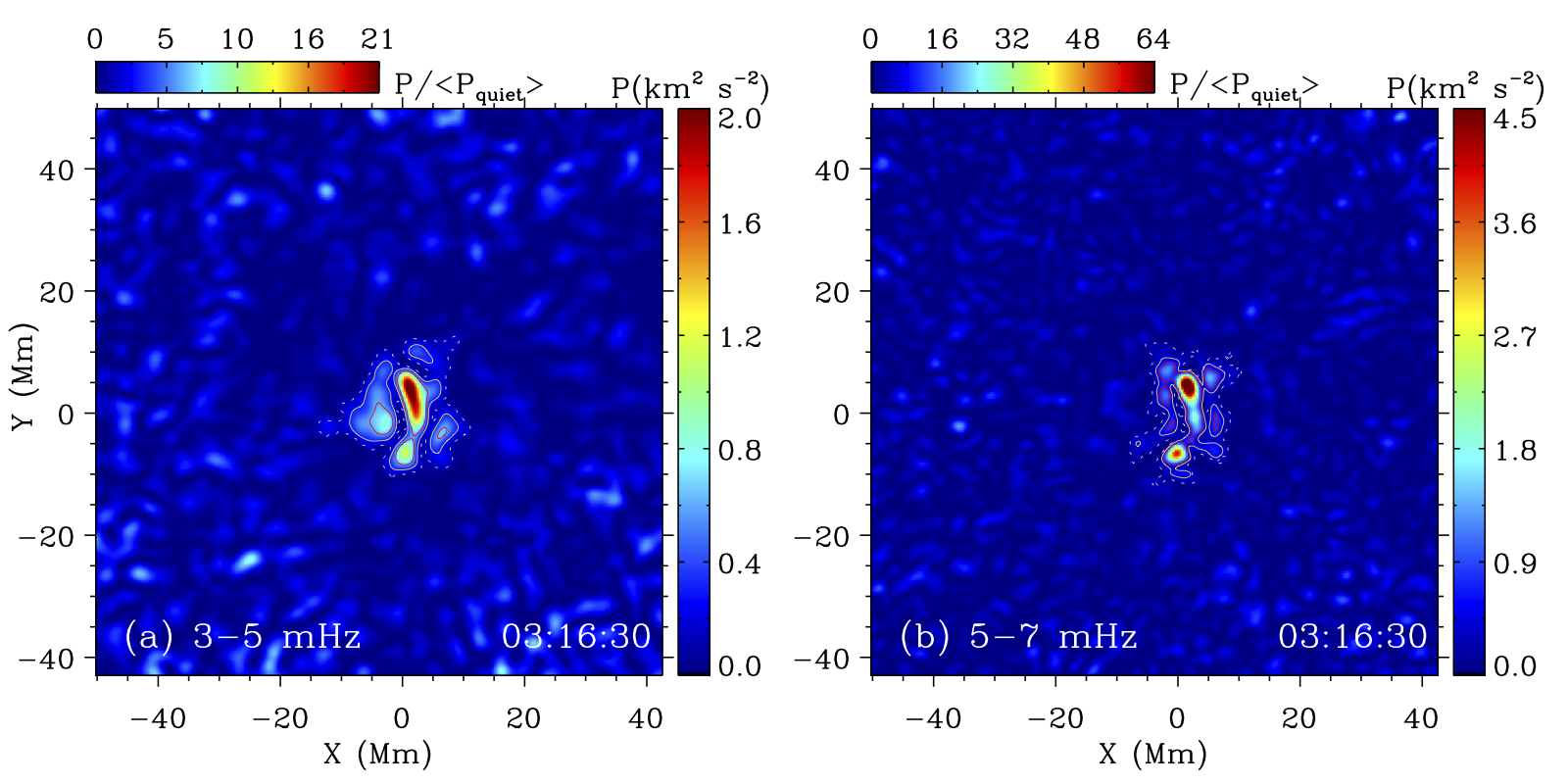
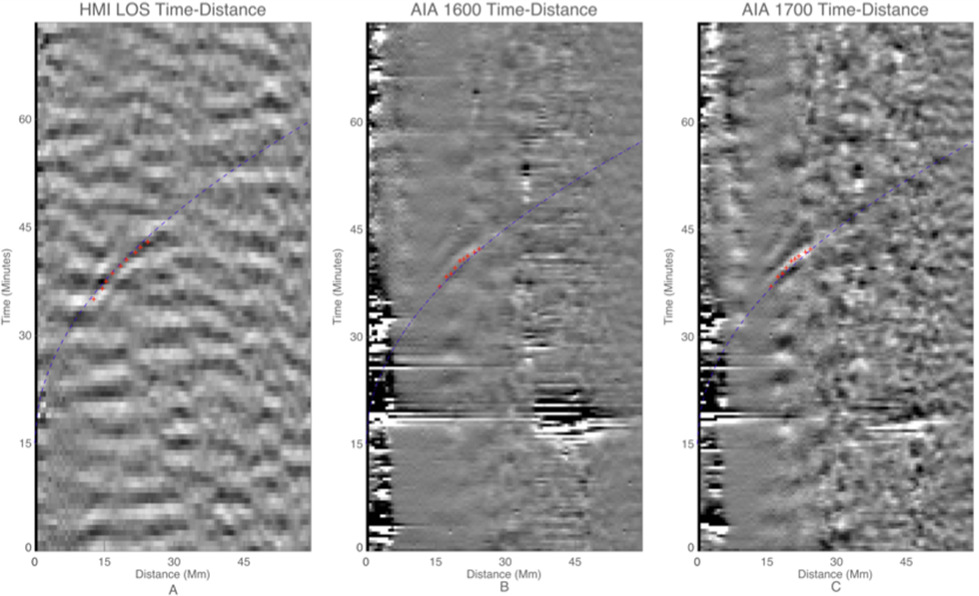
Sunquakes are helioseismic waves excited by solar flares, usually observed in the photosphere. However, some of these events are found to have their counterparts in the chromosphere, as observed in the SDO/AIA UV channels.

167. White-light Continuum Observation of the Off-limb Loops of the SOL2017-09-10 X8.2 Flare: Temporal and Spatial Variations

Contributed by Junwei Zhao. Posted on October 28, 2021

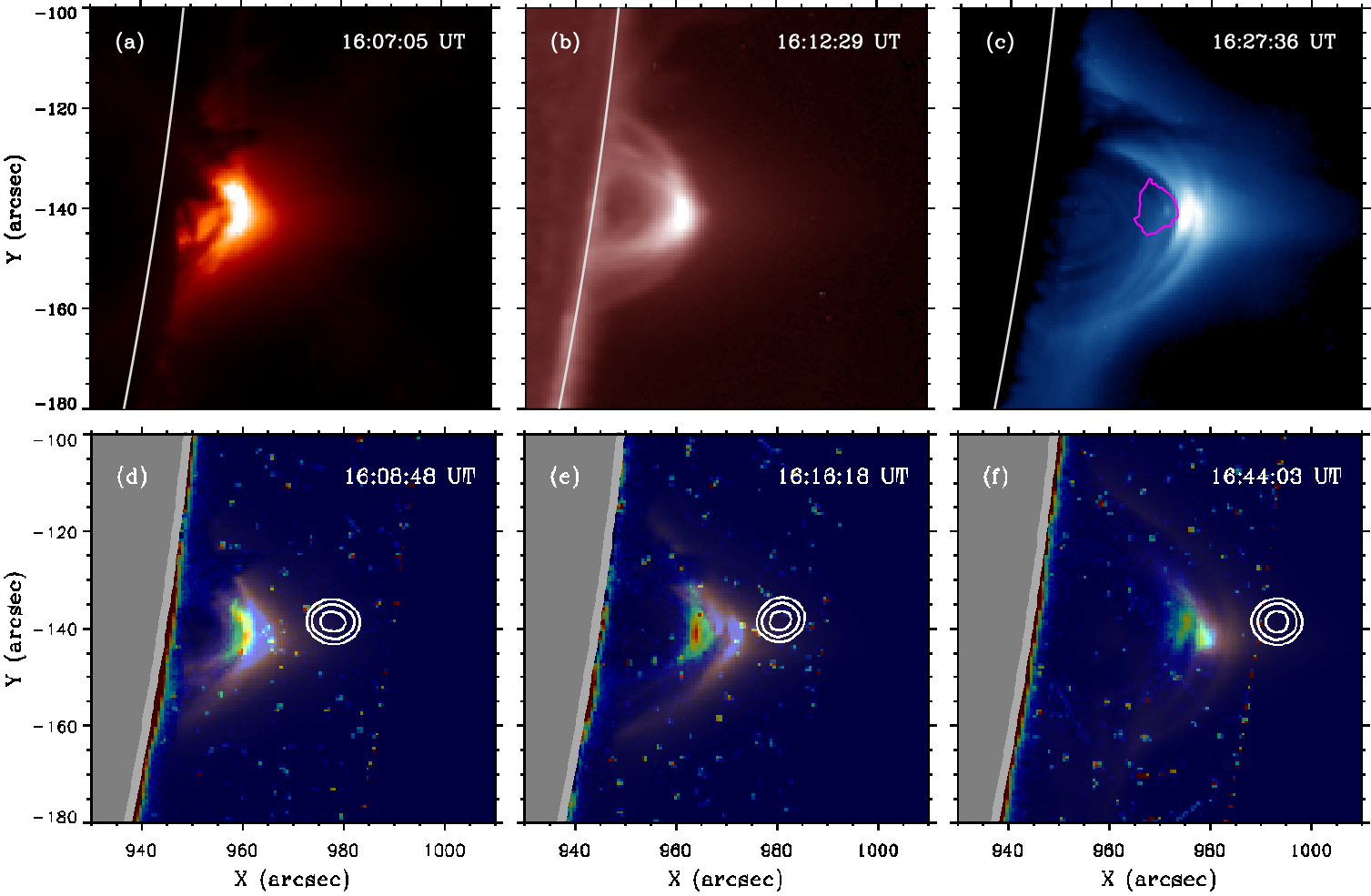
An unprecedented observation of a limb flare in HMI’s white-light continuum shows that the white-light intensity at the post-flare loop-top continues to grow for 16 more minutes while UV/EUV intensities decay. Both the WL/UV intensity and the EUV intensities show quasi-periodic pulsations with a period close to 8.0 and 6.8 minutes, respectively.

147. Recurring Homologous Solar Eruptions in NOAA AR 11429

Contributed by Suman Dhakal. Posted on October 14, 2020

Through studying three homologous eruptive events in an active region, the authors conclude that shearing motions and magnetic flux cancellation play a dominant role leading to the recurrent eruptions, and are key processes forming the eruptive structures.

144. Finding the critical decay index in solar prominence eruptions

Contributed by Vemareddy Panditi. Posted on September 1, 2020

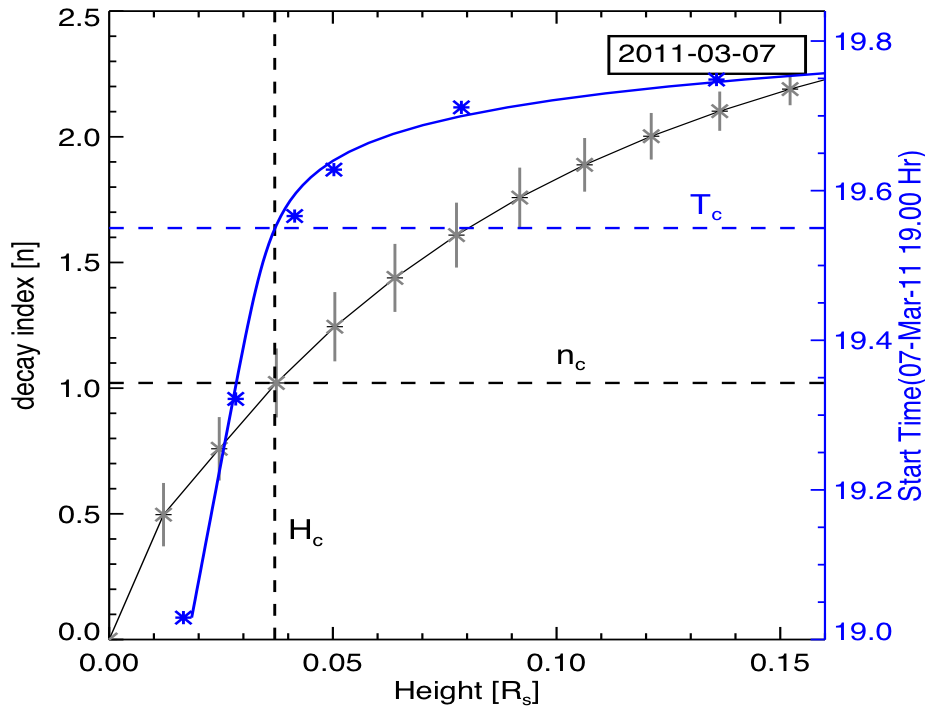
Critical decay index is a measure of the rate at which background field intensity decreases with height over the flux ropes or erupting structures. The indices for 10 eruptive prominences are calculated, and their relations to the eruptions are discussed.

140. Solar Flare Predictive Features Derived from Polarity Inversion Line Masks in Active Regions Using an Unsupervised Machine Learning Algorithm

Contributed by Jingjing Wang. Posted on May 4, 2020

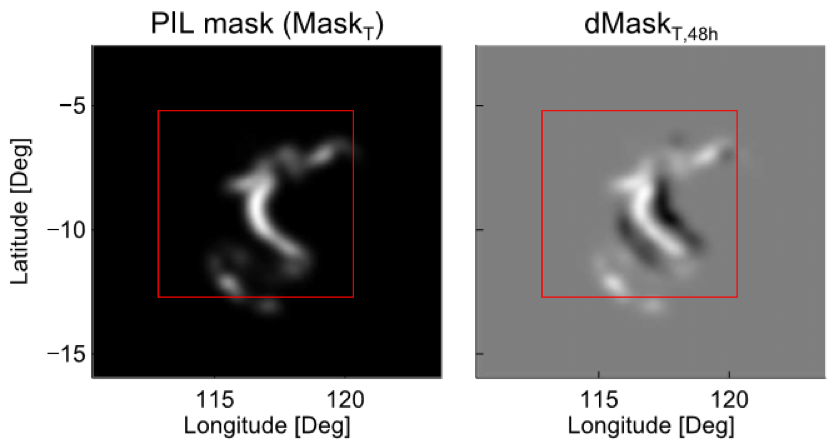
An unsupervised machine-learning algorithm is used on selected features derived from the polarity inversion lines (PIL) mask and difference PIL mask. It is found these features are effective in predicting flaring occurrences.