Author Archives: admin

21. Three-ribbon Solar Flares: What Do They Imply for the 3D Magnetic Field Structure?

Contributed by Haimin Wang. Posted on June 27, 2014

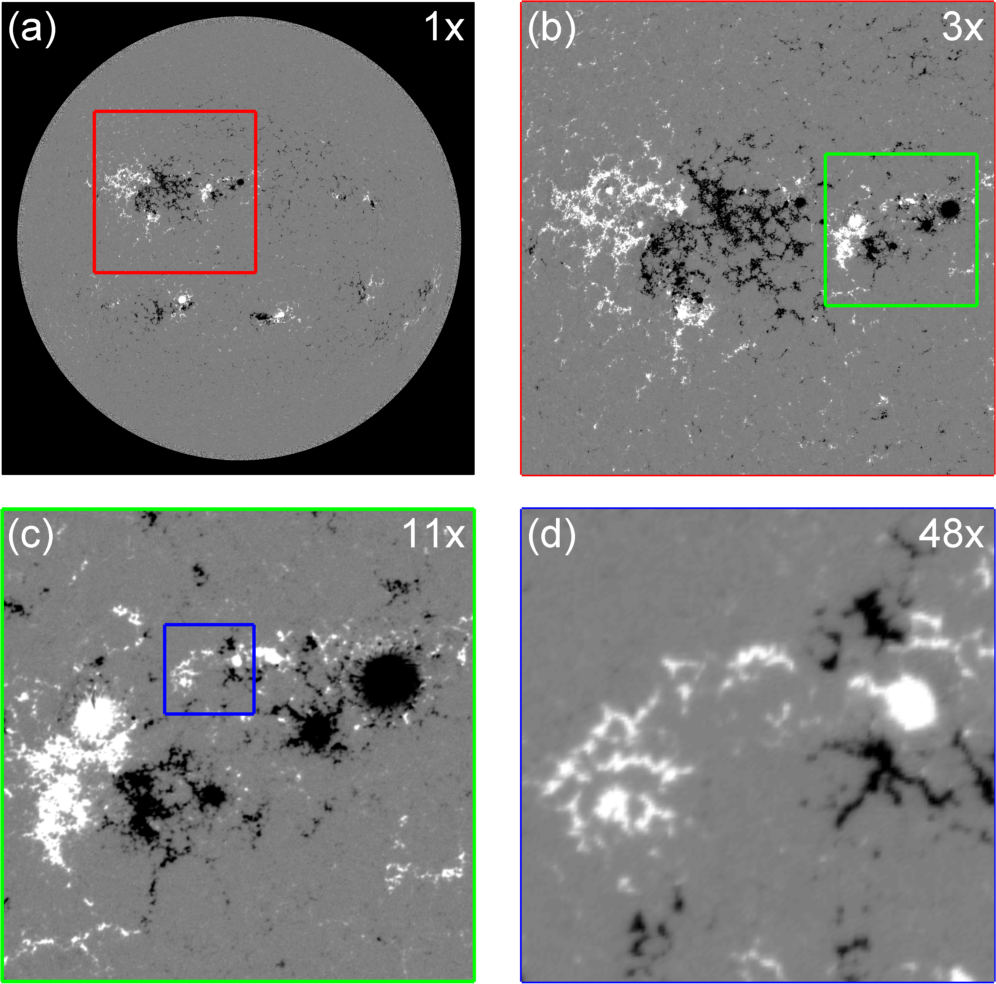
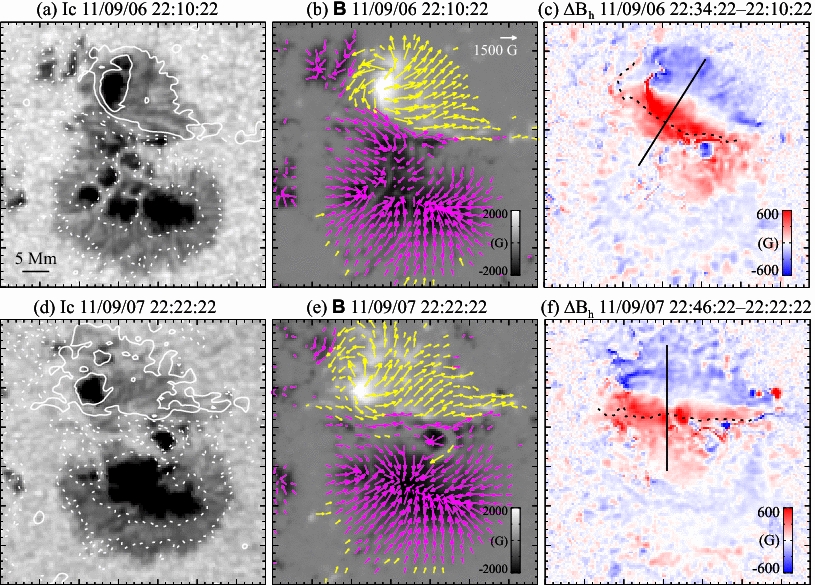
Combining the outstanding capability of HMI/SDO  and NST/BBSO,  we studied two rarely observed three-ribbon flares. The flaring site is characterized with an intriguing &#8220fish-bone&#8221-like morphology. These results are discussed in favor of reconnection along the coronal null-line.

20. Solar Meridional Flow in the Shallow Interior during the Rising Phase of Cycle 24

Contributed by Junwei Zhao. Posted on June 18, 2014

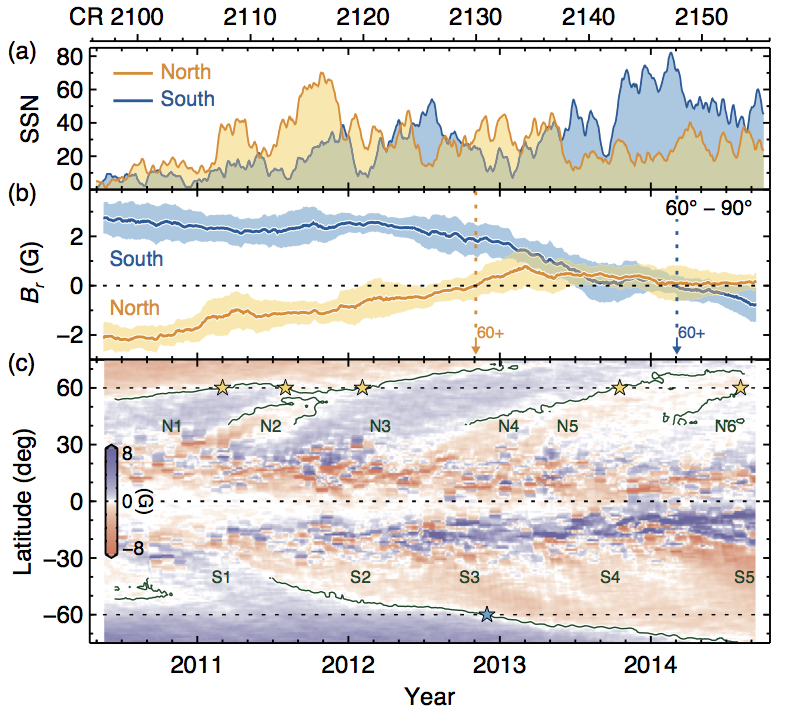
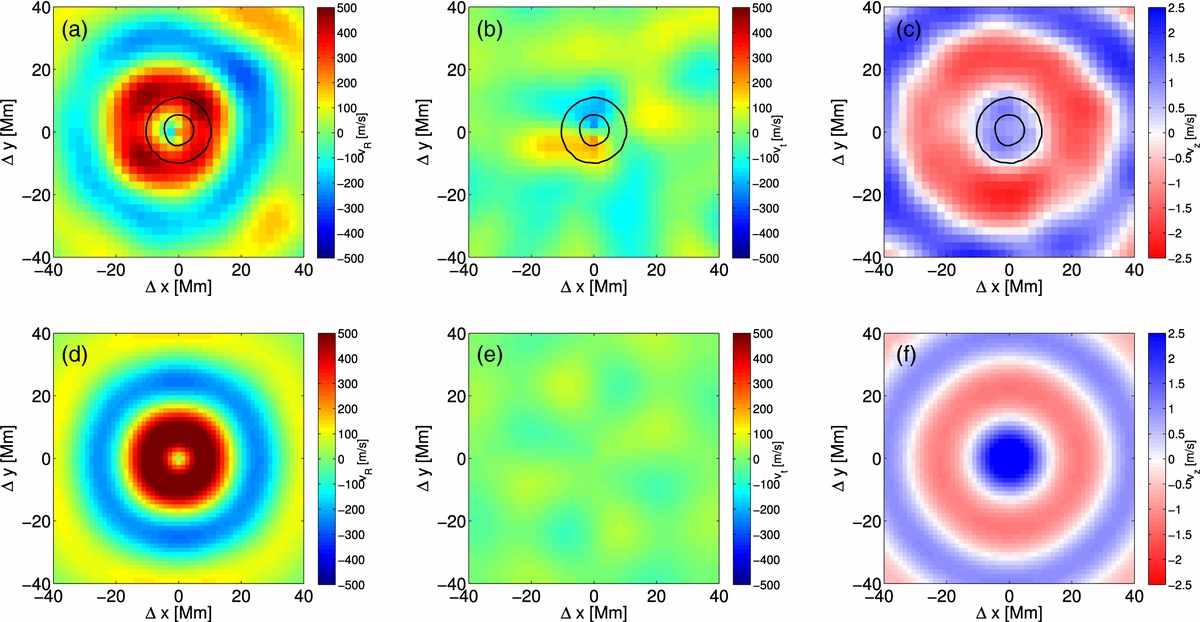
Subsurface meridional flow speed shows an anti-correlation with the magnetic flux being transported poleward above the latitude of 35&#176. In the lower latitude, the residual meridional flow, after a long-time mean profile is subtracted, shows converging flow toward the activity belts.

17. Is the recent discovery of the multi-cell meridional circulation a threat to the flux-transport dynamo?

Contributed by Bidya Binay Karak. Posted on May 27, 2014

Motivated by recent observations we have explored whether the flux-transport dynamo model can work with multi-cell meridional flow. We find that it can work when certain conditions are fulfilled.

16. Spatial-Variance Magnetic Synoptic Maps

Contributed by Luca Bertello. Posted on May 26, 2014

Bertello and collaborators at NSO have made a first attempt to estimate some of the uncertainties in magnetic synoptic maps and evaluated their impact on coronal and heliospheric models. They found that accounting for the statistical uncertainties arising from the distribution of image pixels contributing to each bin in the synoptic map may produce a noticeable change in the results obtained from these models.

15. Potential field source surface “breathes” over the course of the solar cycle

Contributed by WIlliam Arden. Posted on May 15, 2014

Our results show that raising the source surface height 15-30% during solar minimum (depending on the model used) better reproduces the observed IMF open flux from OMNI. We used two different PFSS models and the MDI/HMI magnetograms as input.