40. Fast Convective Flows Throughout the Near-Surface Shear Layer
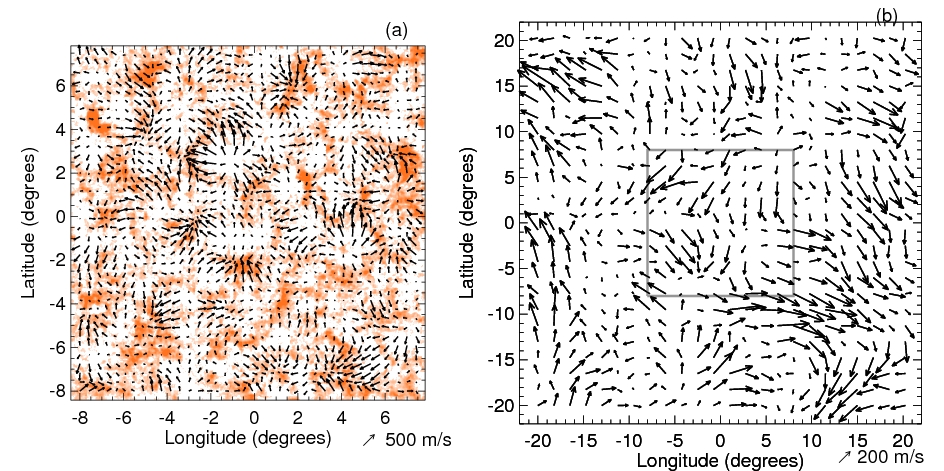
Ring-diagram analysis reveals that the convective flow speed inside the Sun is consistent with most numerical simulations of global convection.

Ring-diagram analysis reveals that the convective flow speed inside the Sun is consistent with most numerical simulations of global convection.
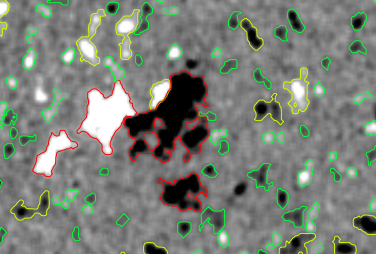
Solar inter-network magnetic field, the weakest component of the solar magnetism, seems to be invariant at ~10 G from the minimum to the maximum phase of Cycle 24. This suggests a possible origin of small-scale, local dynamo.
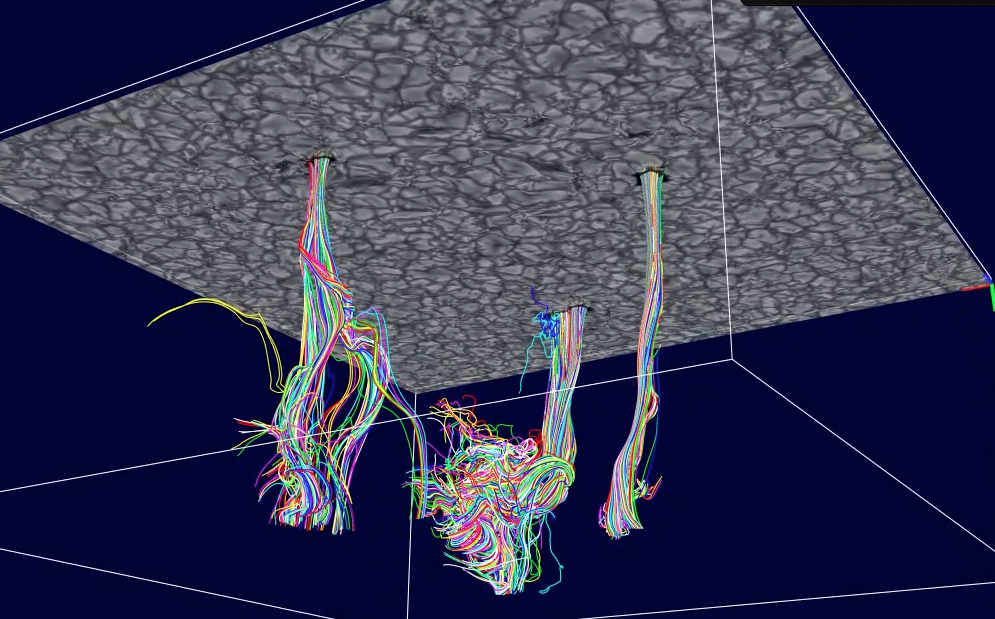
Numerical simulation of sunspots indicate that different subsurface structures are possible. They may be deep coherent flux tubes or twisted spaghetti or shallow structures. It may well be that all the models proposed for sunspot structures are correct for some spot somewhere.
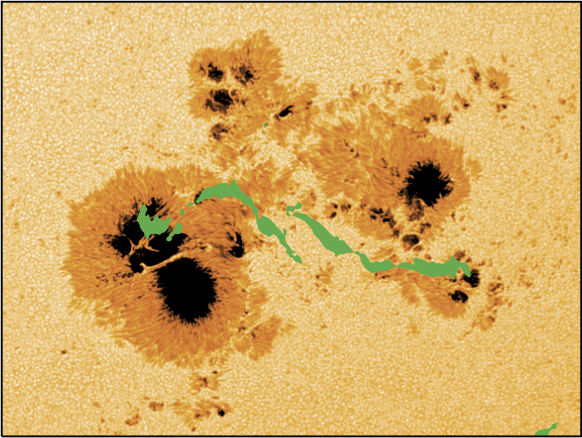
AR 12192 produced six X-class flares, but none was associated with a CME. HMI observations reveal the mild nature of the giant. It has weak relative non-potentiality and strong overlying field; the confined X3 flare leaves little imprint on the photosphere.
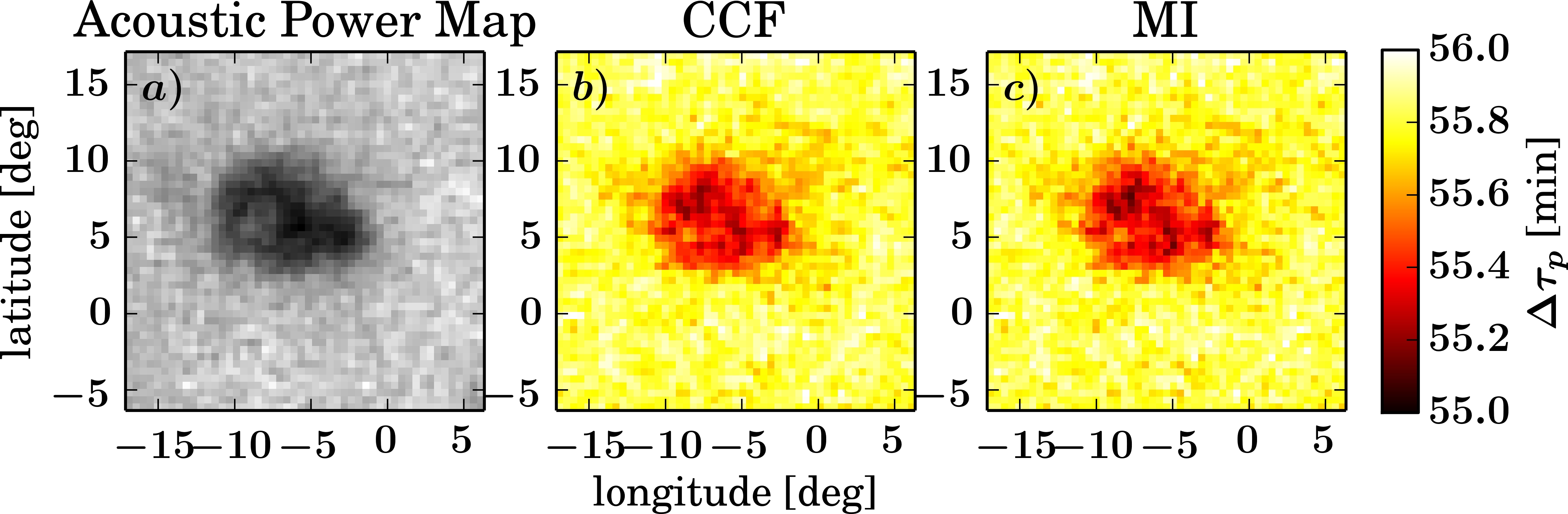
What could be common between solar atmosphere and information exchange in communicating systems? Well, this is all about how information is transferred from point A to point B. This work represents a proof-of-concept application of methods of mutual information (MI) to helioseismology.
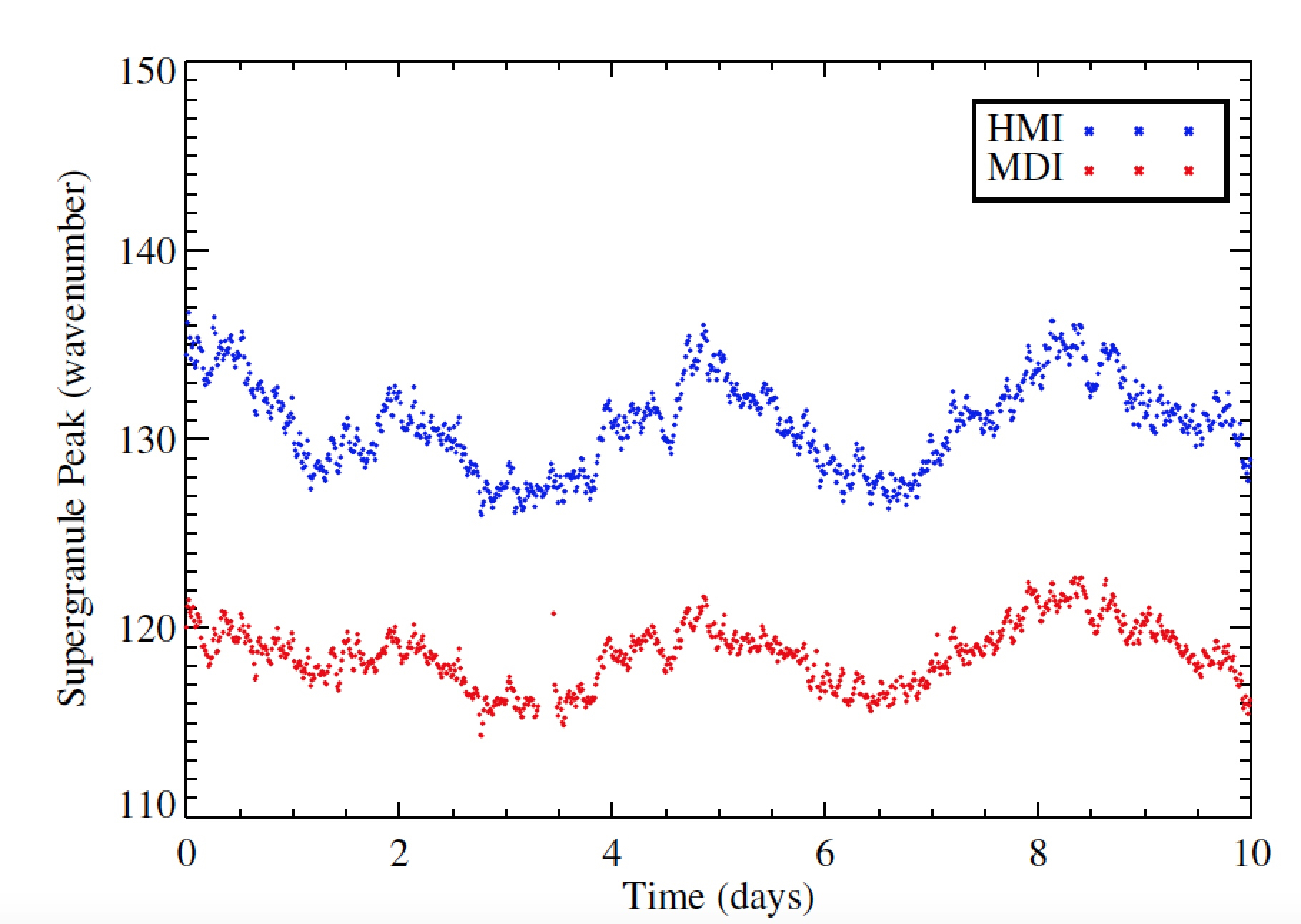
The mean size of supergranulation has been found to vary over time with a period of 3-5 days. We have used full-disk Doppler images from the Helioseismic Magnetic Imager (HMI) to verify that these fluctuations are solar in origin.
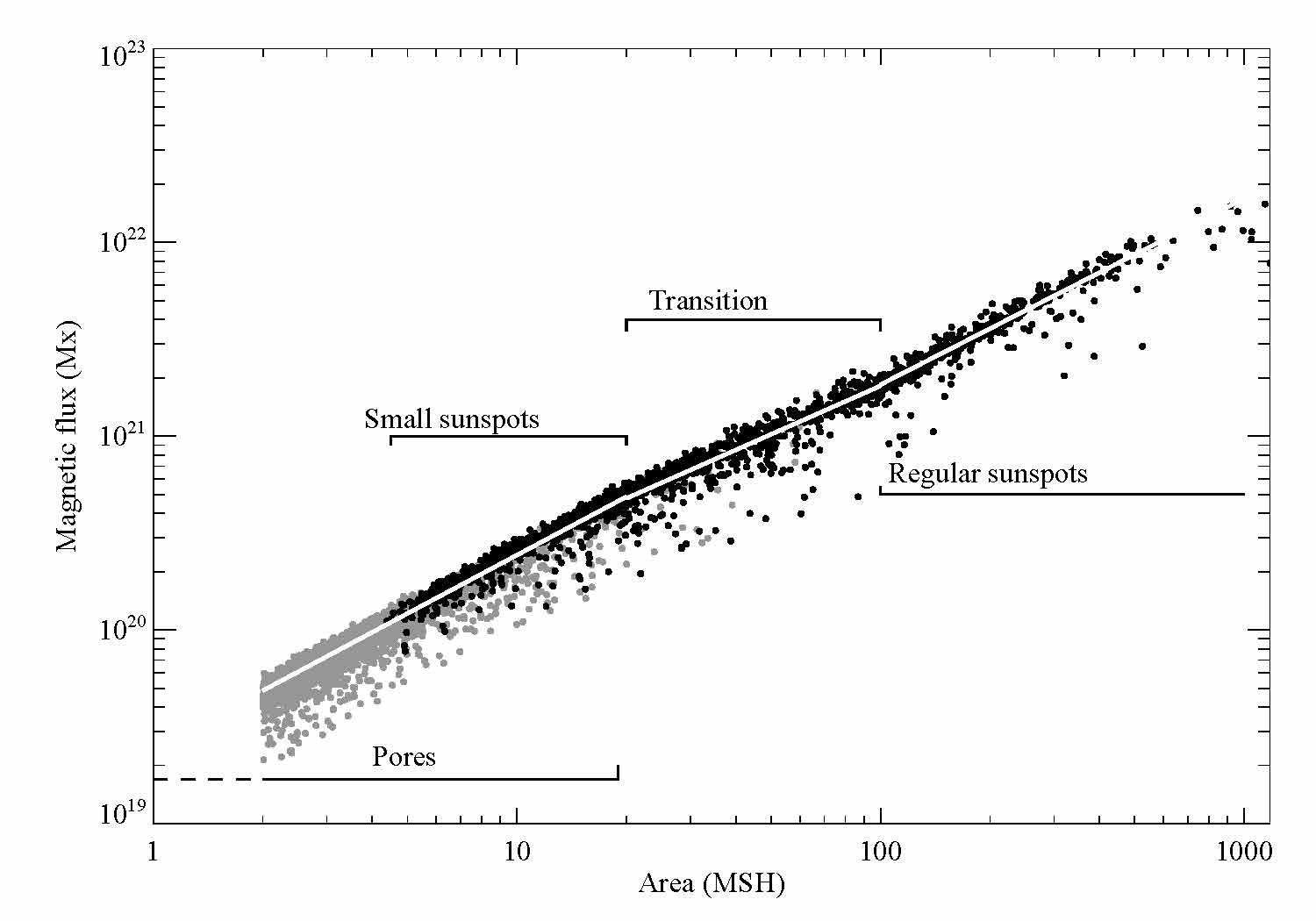
Are all sunspots created equal or are some sunspots formed by a different mechanism than others? High quality observations from the Helioseismic Magnetic Imager (HMI) on board the Solar Dynamics Observatory (SDO) suggest bimodal distribution in properties of sunspots.

We present potential filed and nonlinear force-free magnetic field (NLFFF) extrapolations of full-disk magnetogram observed by SDO/HMI instrument. The study shows that NLFFF model agrees significantly better with coronal magnetic loops as observed in SDO/AIA images.
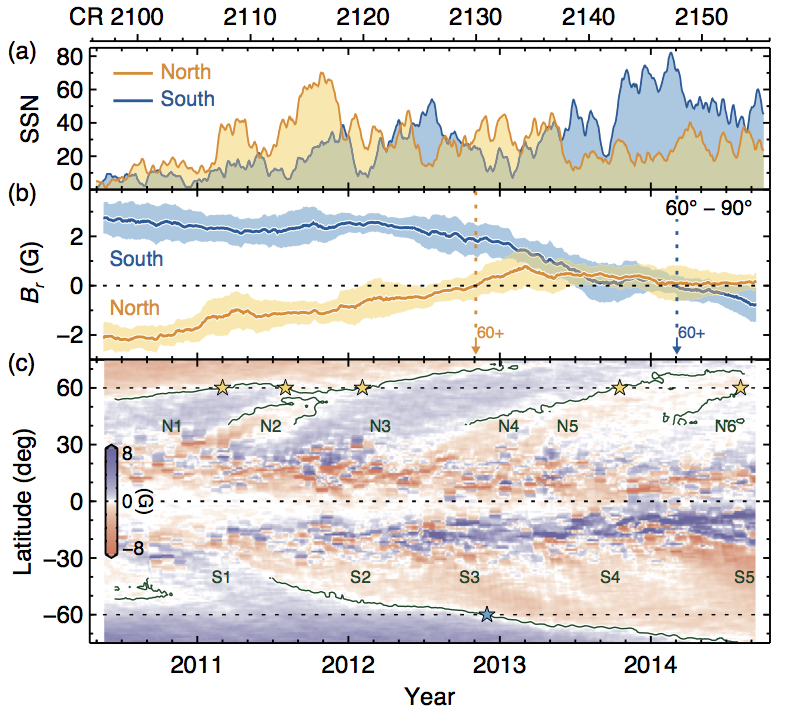
HMI observations reveal a slow, north-south asymmetric polar magnetic field reversal. Cycle 24 has been weak; an even weaker Cycle 25 seems probable.
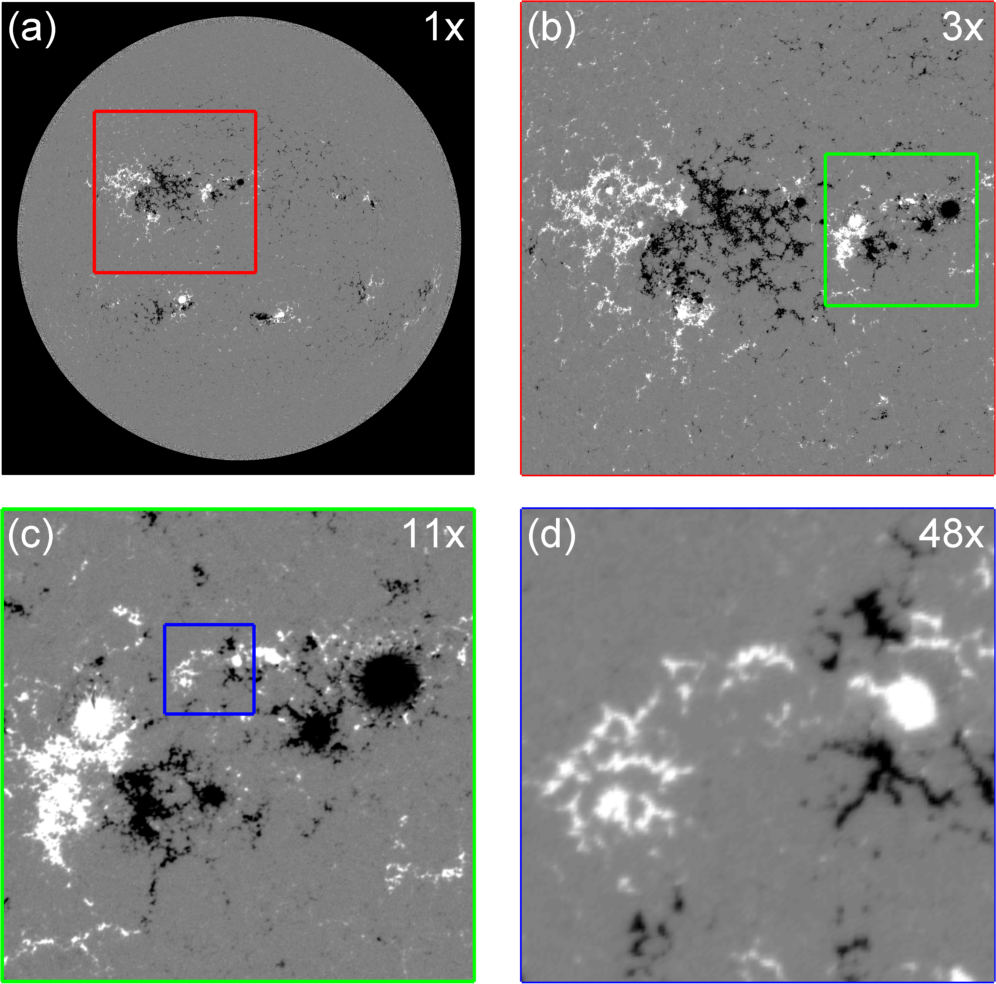
Taking advantage of 11 different databases, we use statistical analysis to probe the nature of photospheric magnetic structures. We find evidence of two separate mechanisms at play, and propose that they are directly connected to the global and small-scale components of the solar dynamo.