Tag Archives: magnetic field

173. Buildup of the Magnetic Flux Ropes in Homologous Solar Eruptions

Contributed by Rui Wang. Posted on February 17, 2022

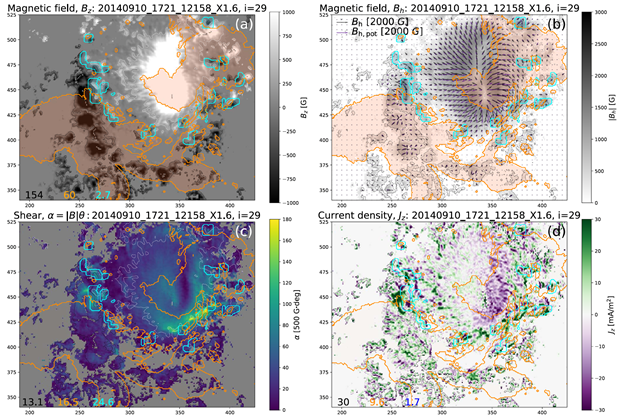
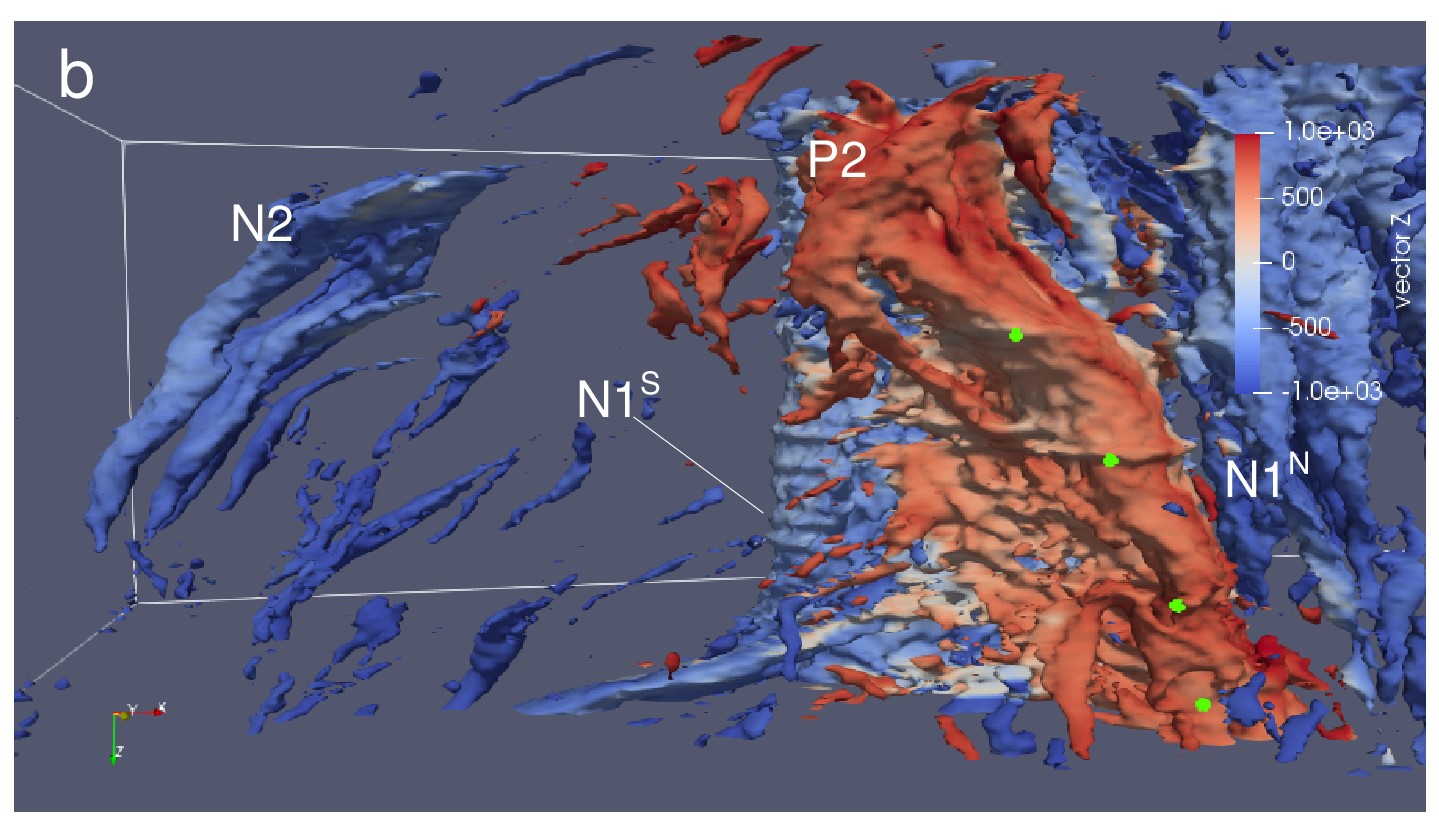
This analysis shows that a new bipolar emergence, whose positive polarity collided with the pre-existing negative polarity, in AR11283 led to energy and helicity buildup in the form of magnetic flux ropes. Recurrent energy releases caused a few homologous CMEs from this region.

171. Flare-induced Sunquake Signatures in the Ultraviolet as Observed by the Atmospheric Imaging Assembly

Contributed by Sean Quinn. Posted on November 23, 2021

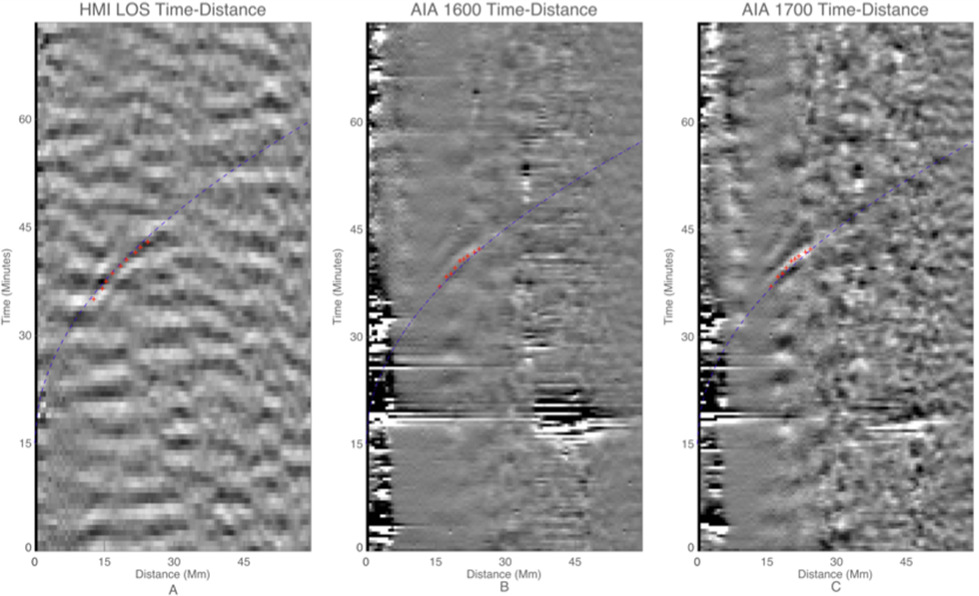
Sunquakes are helioseismic waves excited by solar flares, usually observed in the photosphere. However, some of these events are found to have their counterparts in the chromosphere, as observed in the SDO/AIA UV channels.

170. Solar Toroidal Field Evolution Spanning Four Sunspot Cycles Seen By WSO, SOHO/MDI, and SDO/HMI

Contributed by Allison L. Liu. Posted on November 19, 2021

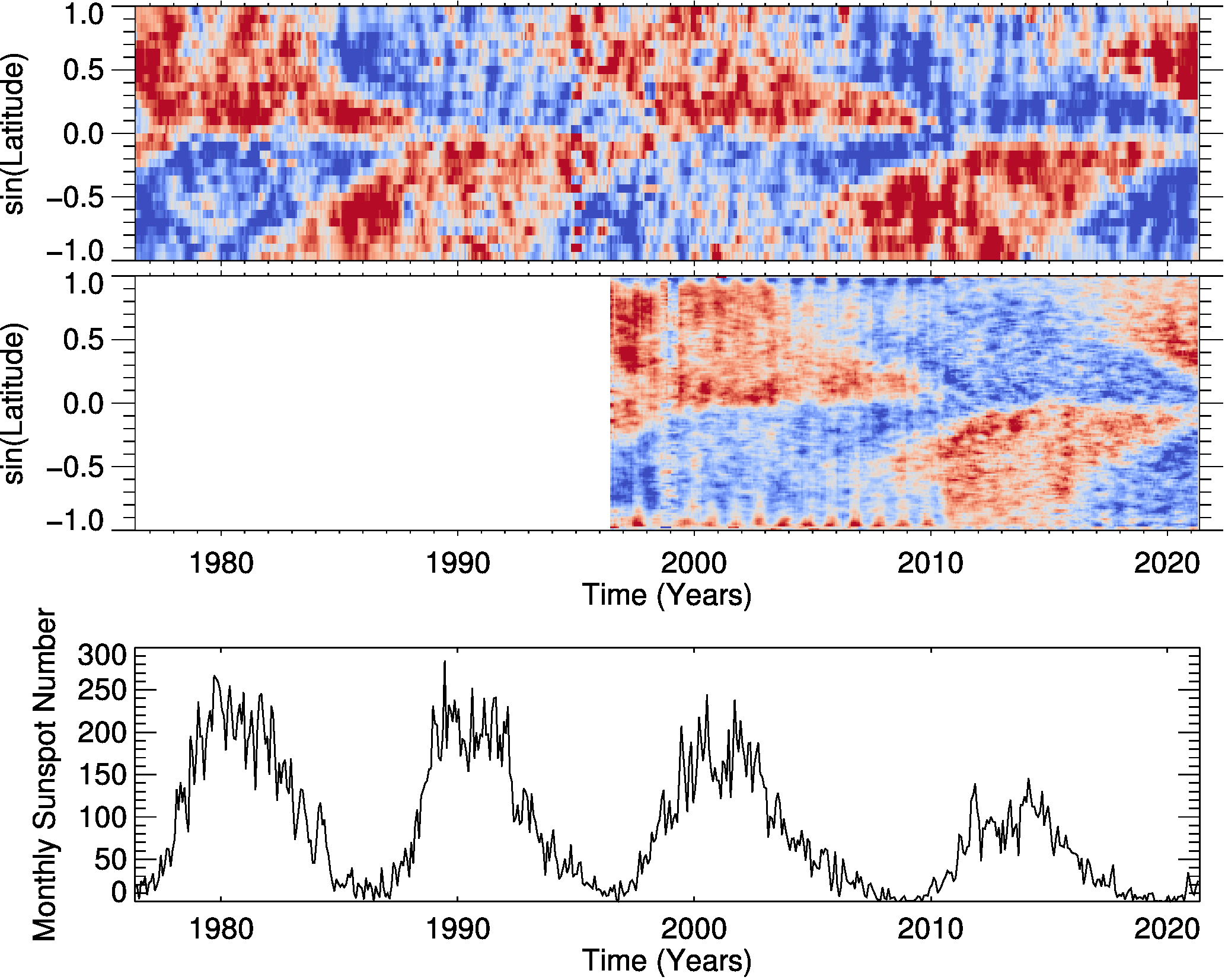
The Sun’s toroidal field is derived using 45 years of Wilcox Solar Observatory data, 16 years of Michelson Doppler Imager data, and 11 years of Helioseismic and Magnetic Imager data. The duration of each cycle in both hemispheres is also estimated.

168. Introducing the SPEAR Catalogue from HMI Data

Contributed by Aimee Norton. Posted on October 29, 2021

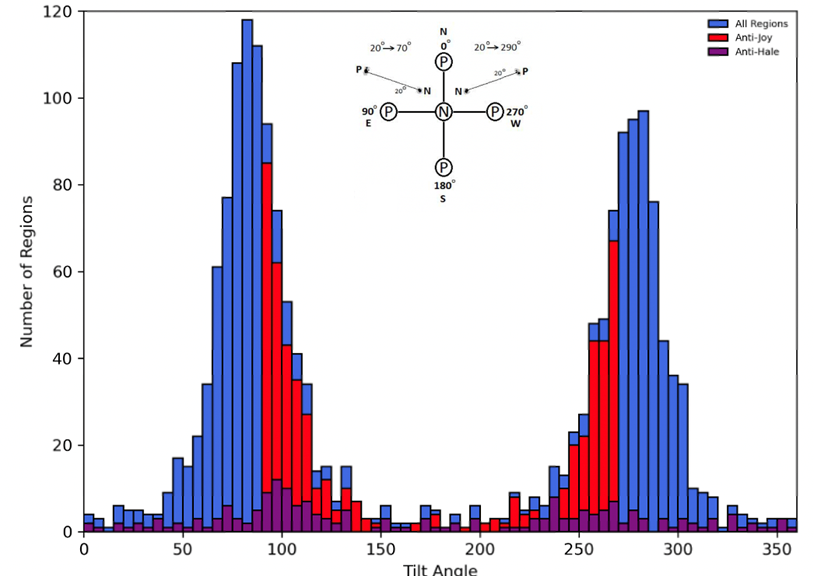
In order to make the properties of magnetic features observed by SDO/HMI more accessible, the Solar Photospheric Ephemeral and Active Region (SPEAR) catalogue has been created as an easy-to-read tabulated text file. Tilt angles from the SPEAR catalogue are shown as a histogram (top) and as a function of latitude (bottom) with colors indicating all regions (blue), regions with anti-Joy (red), and anti-Hale (purple) tilts. Over 40% of regions disobey the laws of Joy and Hale.

159. Magnetic Field Dependence of Bipolar Magnetic Region Tilts on the Sun: Indication of Tilt Quenching

Contributed by Bibhuti Kumar Jha. Posted on June 15, 2021

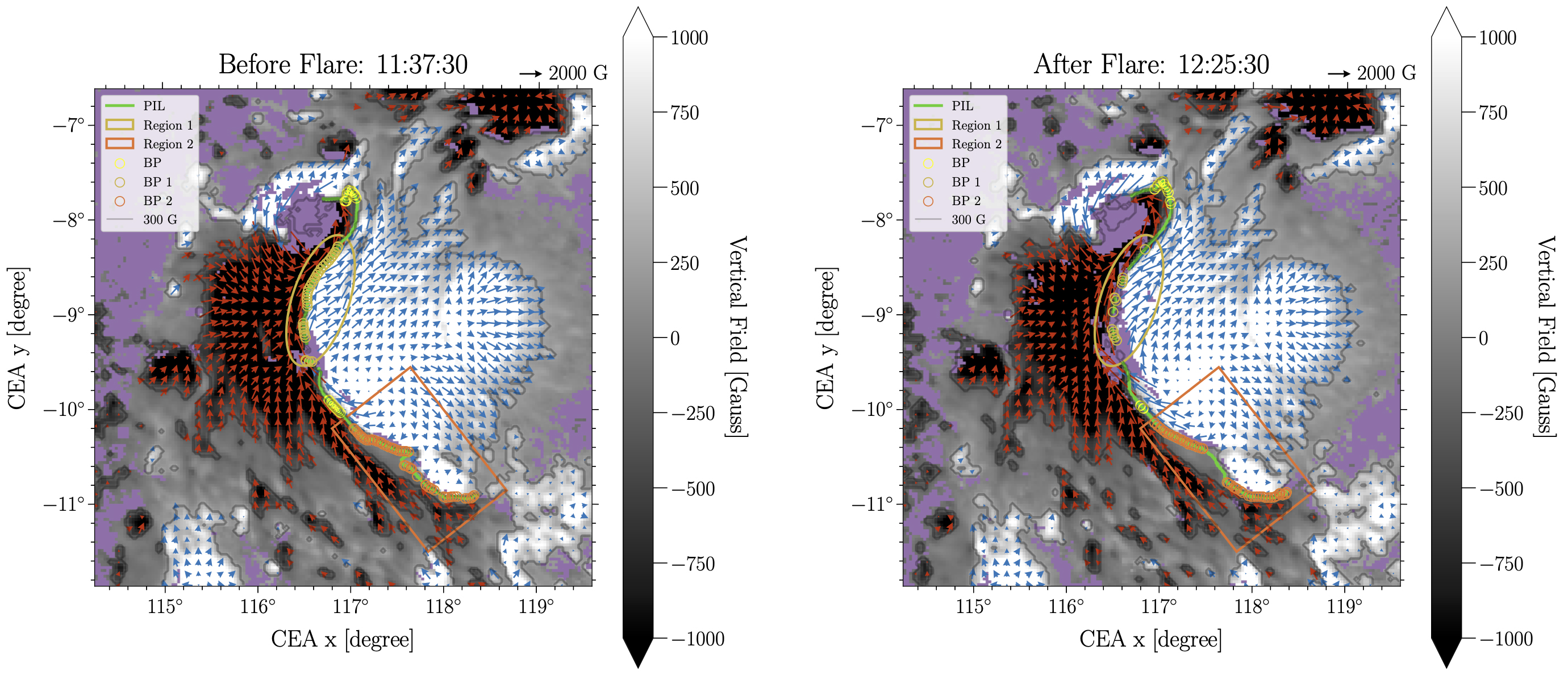
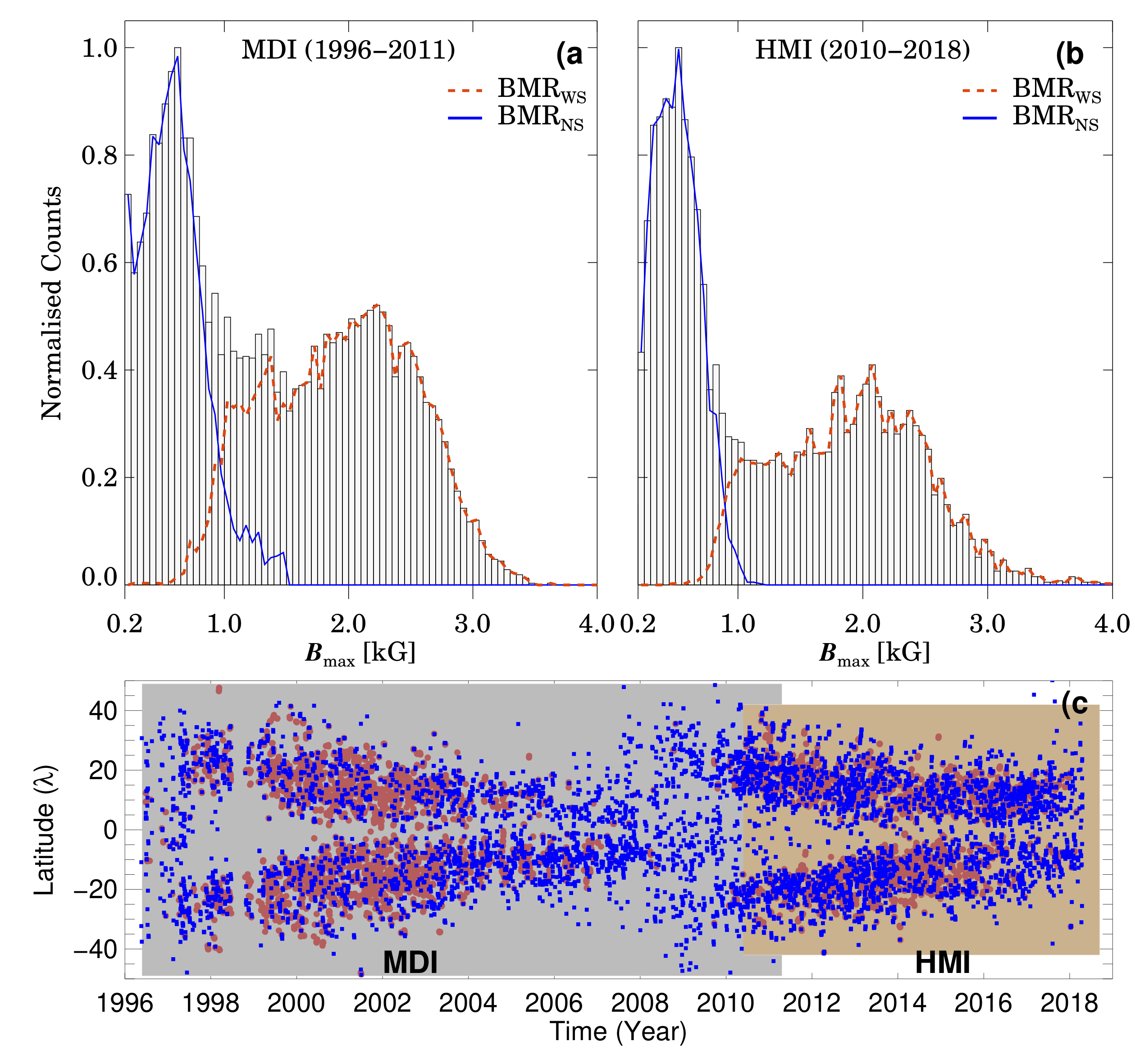
Magnetic-field dependence of active regions’ tilt angles are analyzed using the MDI and HMI observations for two solar cycles. The variation of the tilt angles with the maximum magnetic-field strength of the ARs indicates a nonlinear tilt quenching in the Babcock–Leighton process.

156. Fast and Accurate Emulation of the SDO/HMI Stokes Inversion with Uncertainty Quantification

Contributed by Richard Higgins. Posted on April 16, 2021

An emulation of the VFISV Stokes Inversion that trains a deep
network (U-Net) to map directly from IQUV polarized light to Milne-Eddington magnetic field parameters. The accuracy of this method suggests that it could serve as a warm-start for VFISV or as a pre-disambiguation stand-in.