Contributed by Leif Svalgaard. Posted on January 8, 2018
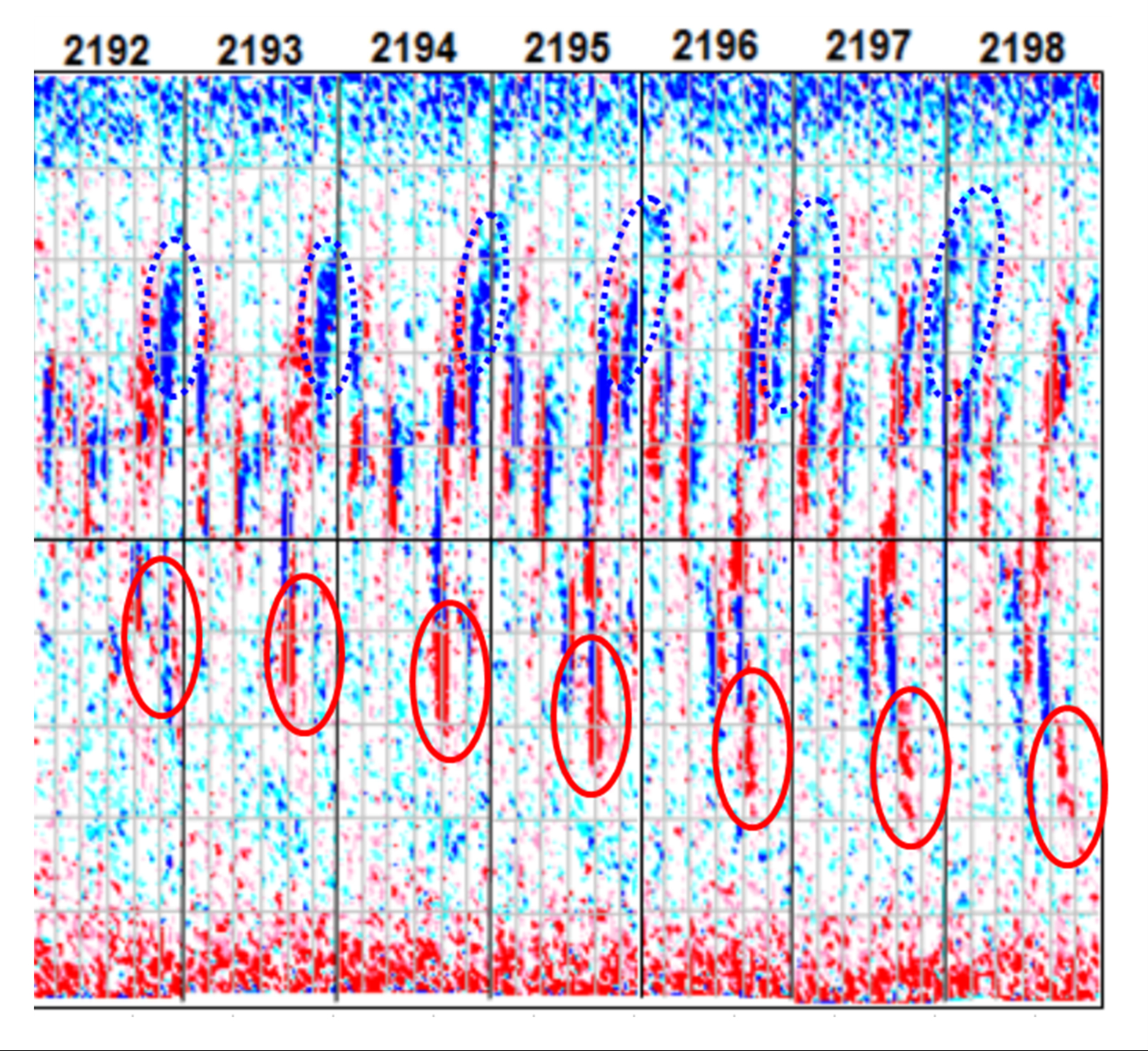
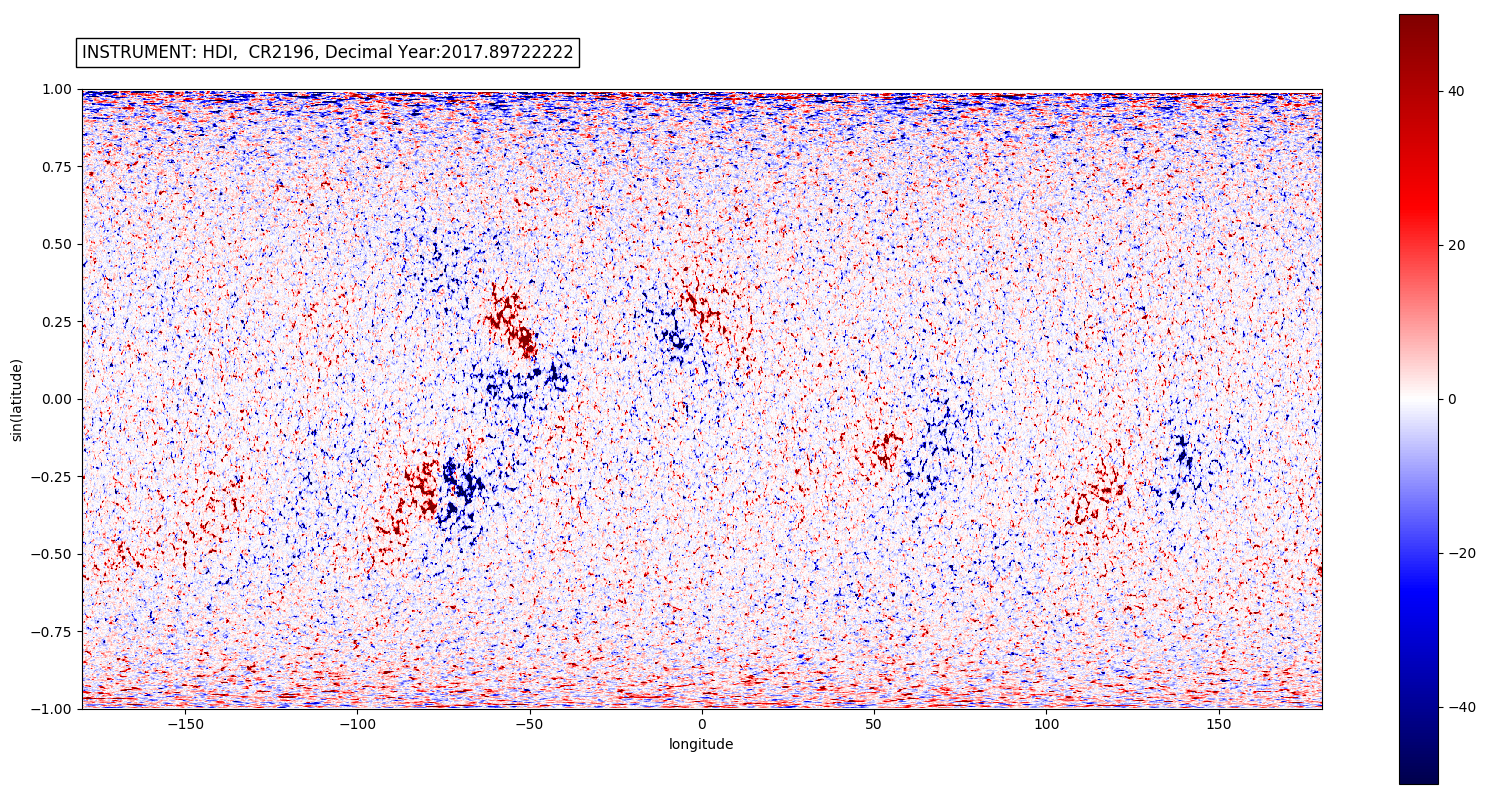
Super-synoptic map is constructed using SDO/HMI’s synoptic magnetic maps of each Carrington rotation, covering the period of May 2010 to December 2017. Polarity reversals can be clearly seen in the map.
Contributed by Adam Finley. Posted on December 21, 2017
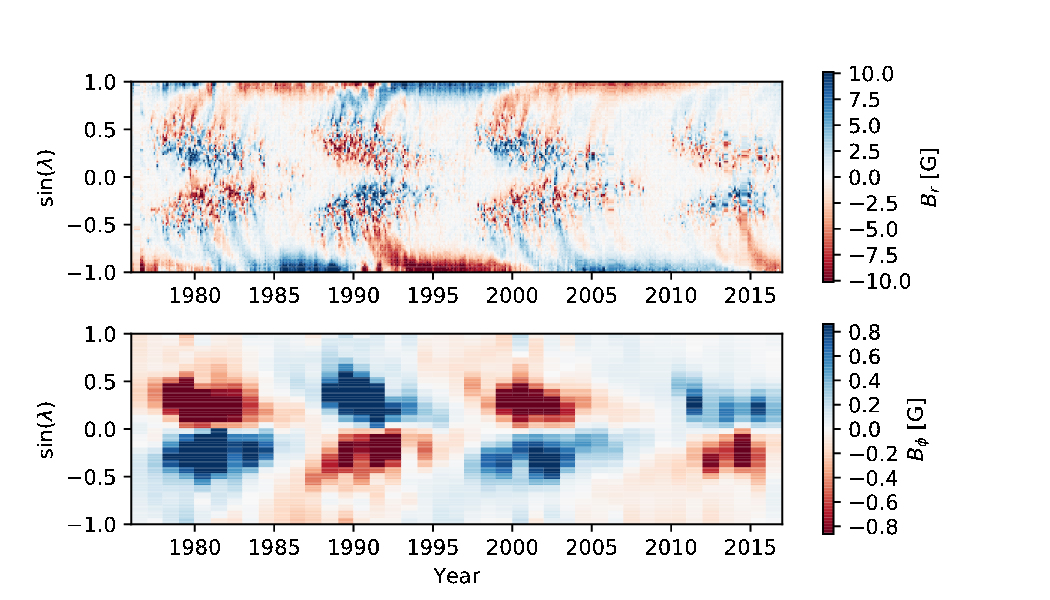
The dipole, quadrupole, and octupole components of the Sun’s magnetic field are calculated and visualized, covering the last 22 years of the Sun’s activities.
Contributed by Zhi Xu. Posted on December 18, 2017
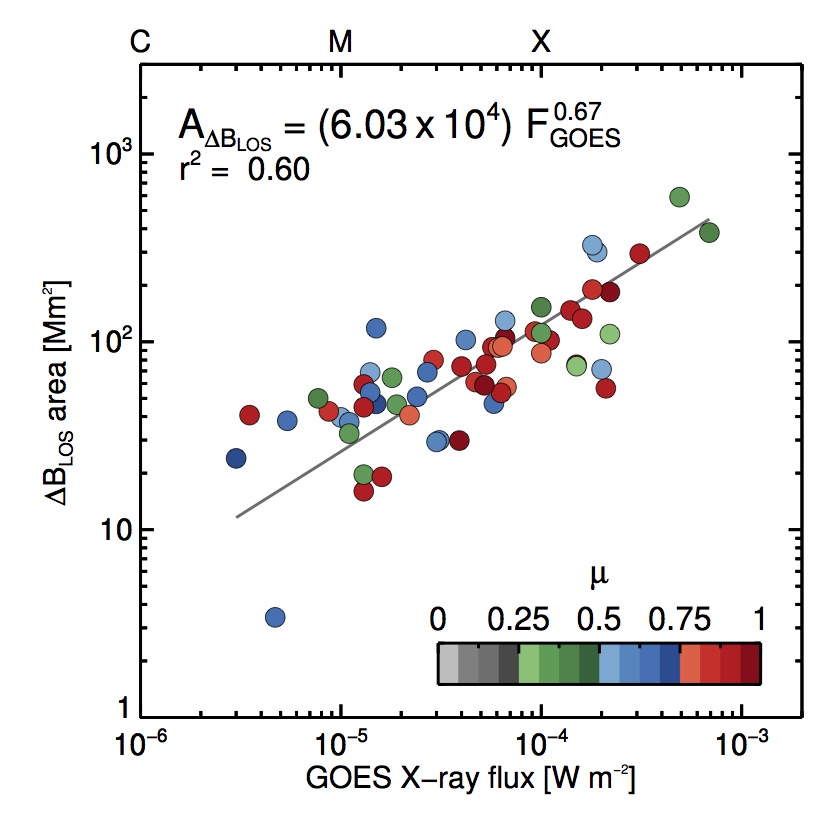
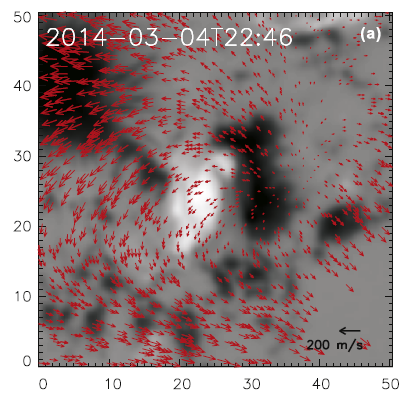
Two homologous circular-ribbon flares associated with two filament eruptions were observed and analyzed. The emergence of magnetic flux ropes helped to inject free energy into the region and drive the magnetic reconnection above it.
Contributed by Leif Svalgaard. Posted on December 6, 2017
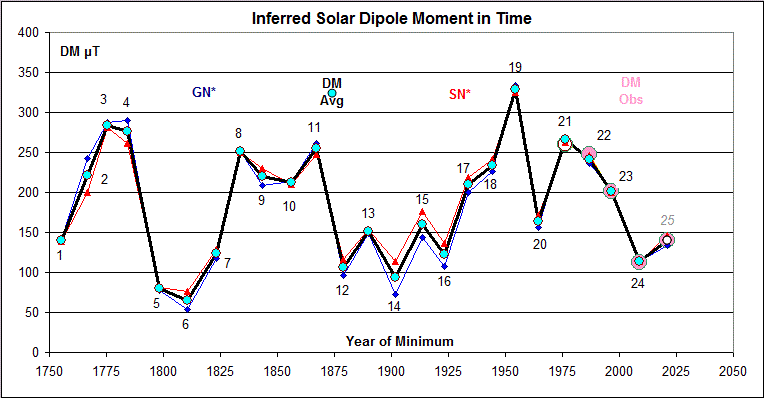
The dipole moment observed by the WSO during the pre-minimum years of the last 4 solar cycles are used to establish a relation with the sunspot numbers of the following maximum years. The relation is then used to calculate the dipole moment for all the past cycles.
Contributed by Johannes Löhner-Böttcher. Posted on April 25, 2016
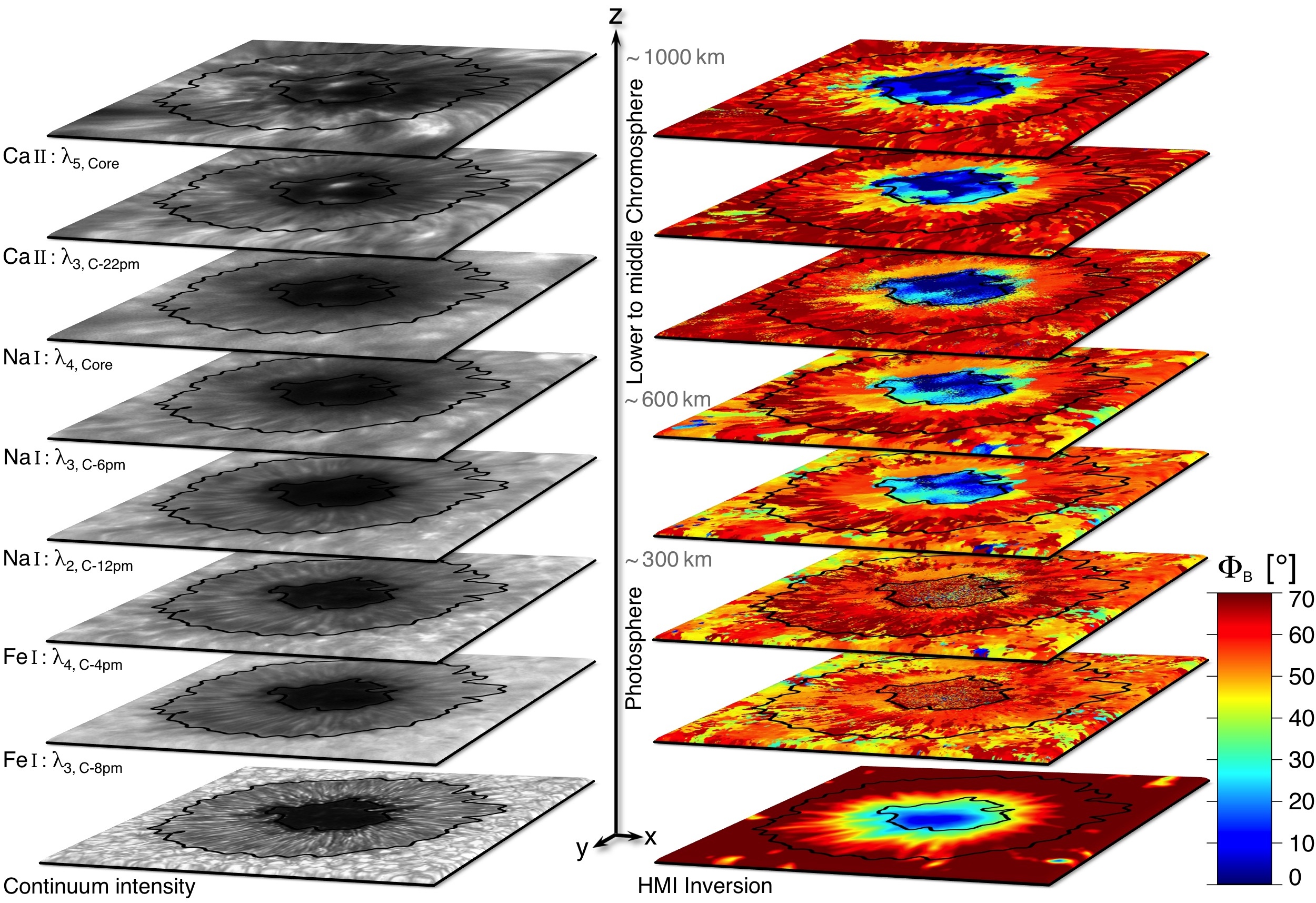
We observed magnetoacoustic waves propagating along the magnetic field lines of a sunspot. Based on the wave periods and atmospheric characteristics, we reconstructed the magnetic field topology of the sunspot.
Contributed by Robert Stein. Posted on May 12, 2015
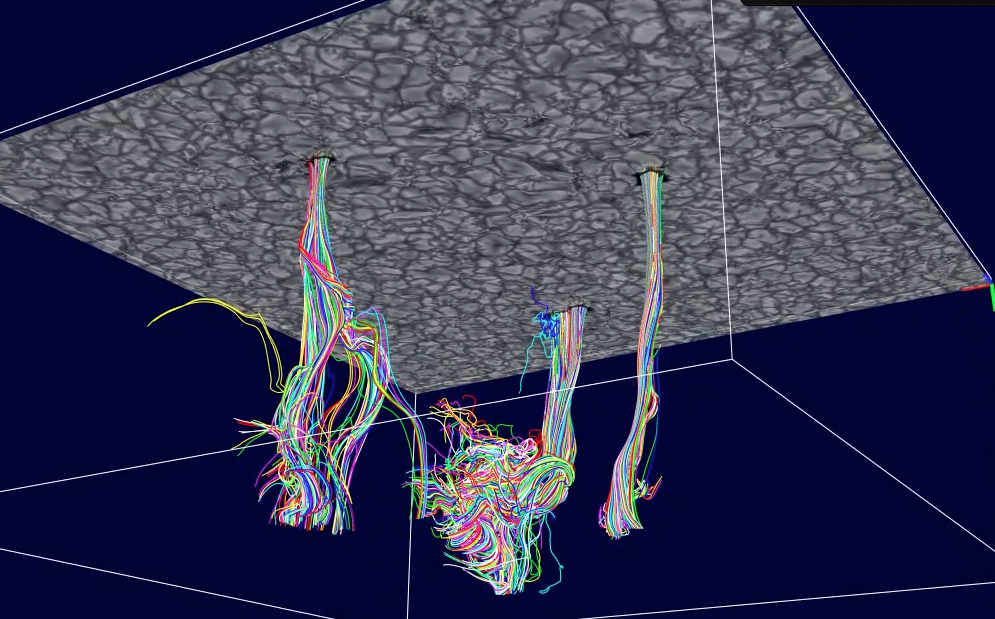
Numerical simulation of sunspots indicate that different subsurface structures are possible. They may be deep coherent flux tubes or twisted spaghetti or shallow structures. It may well be that all the models proposed for sunspot structures are correct for some spot somewhere.
Contributed by Tilaye Tadesse. Posted on January 23, 2015
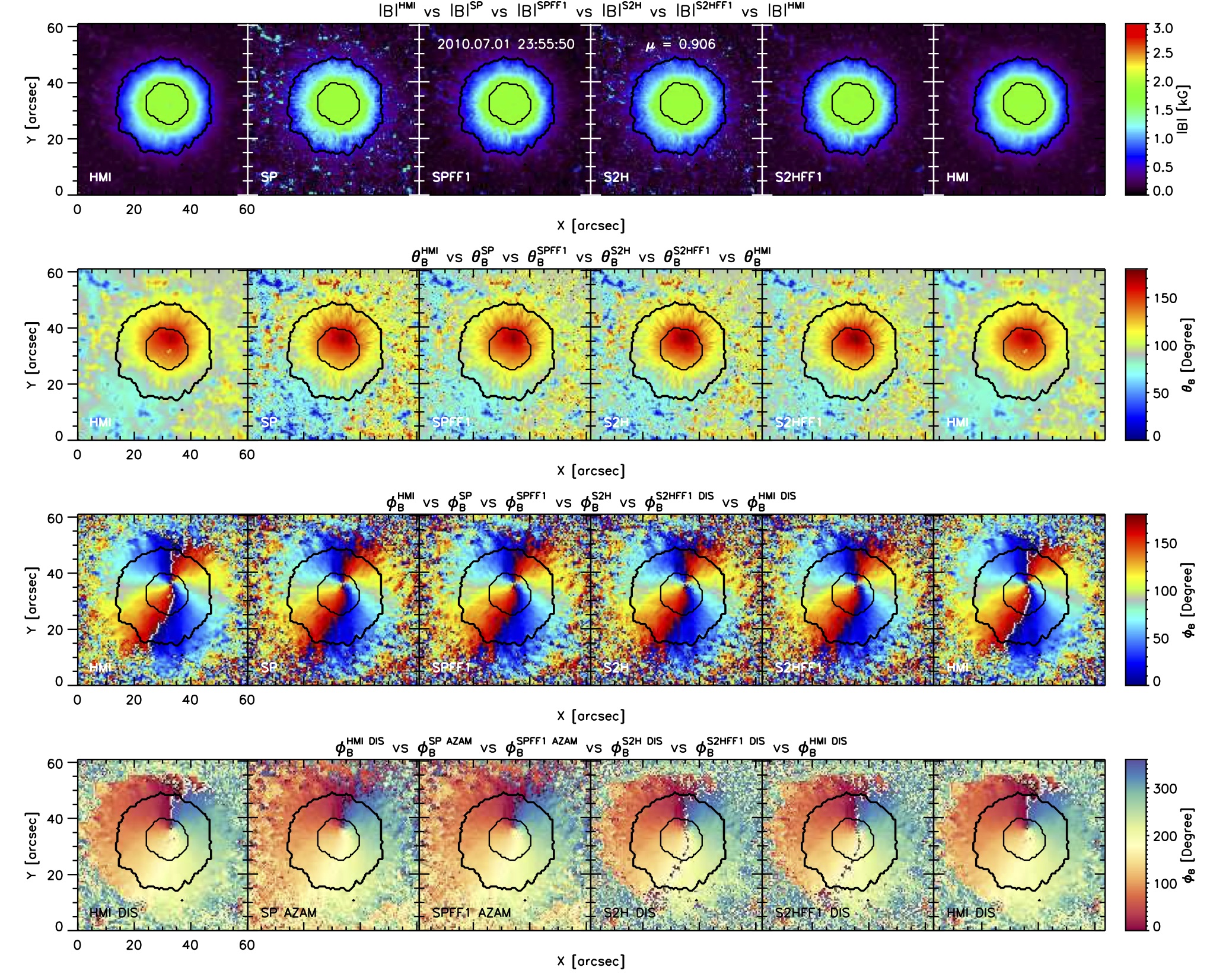
We present potential filed and nonlinear force-free magnetic field (NLFFF) extrapolations of full-disk magnetogram observed by SDO/HMI instrument. The study shows that NLFFF model agrees significantly better with coronal magnetic loops as observed in SDO/AIA images.